
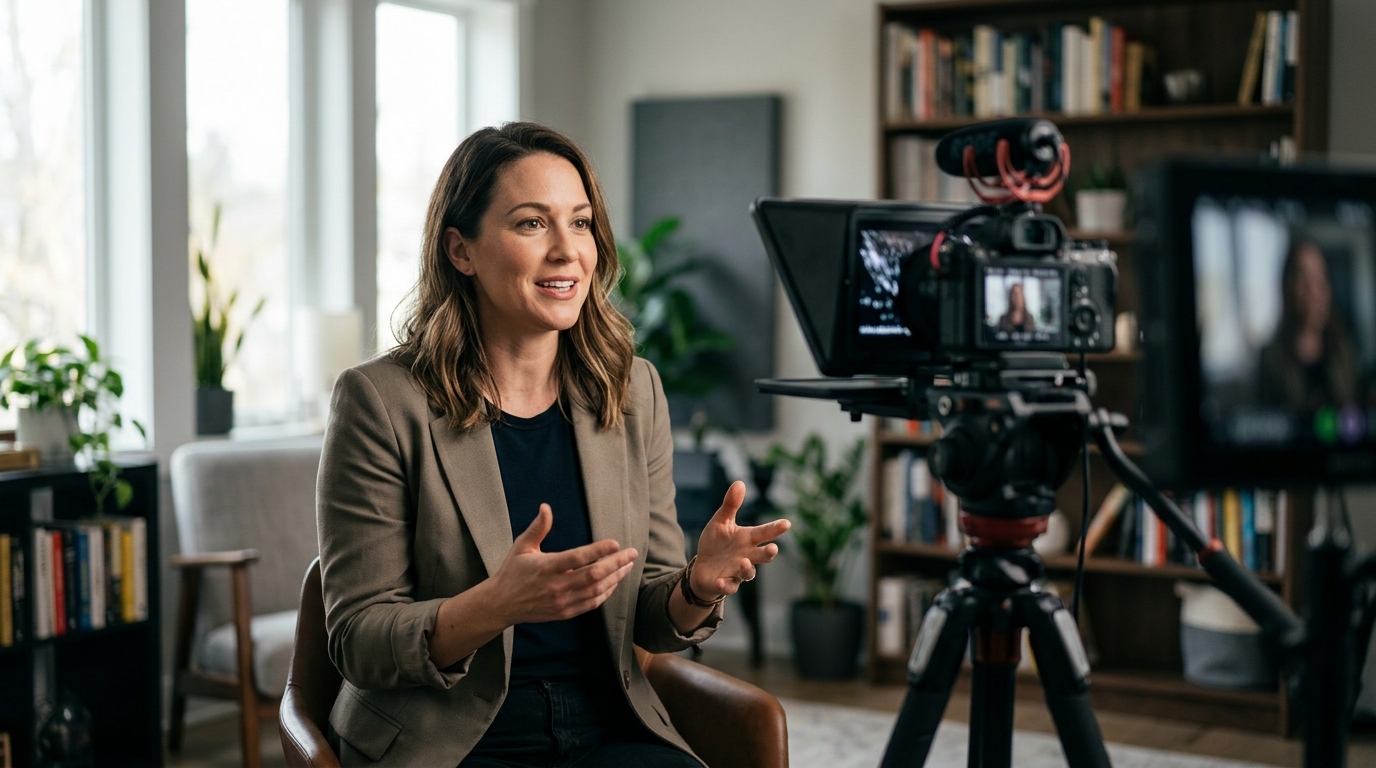
Video content is no longer optional for business growth; it is the primary driver of digital authority. Data shows that landing pages with video see 80% higher conversions compared to those without. This statistic highlights a critical reality for modern entrepreneurs. If your on-camera presence feels stiff, rehearsed, or overly scripted, you are losing trust before you even deliver your core message. The goal is not to memorize a script word-for-word but to master the art of unscripted, authentic communication. This guide provides a step-by-step framework to help you speak naturally on camera, build genuine connections, and drive revenue through strategic visibility. (Inspired Living Video Marketing)
Understanding the Psychology of Unscripted Speaking
Many professionals fear going off-script because they worry about losing their train of thought or appearing unprofessional. However, the audience craves authenticity. When you read from a script, your eyes often dart side-to-side, and your tone becomes monotone. This signals to the viewer that you are performing rather than connecting. Authenticity builds trust, and trust drives sales.
The key to overcoming this fear is shifting your mindset from "performance" to "conversation." You are not delivering a lecture to a void. You are speaking to one ideal client who needs your solution. This shift reduces anxiety and naturally improves your delivery. According to industry benchmarks, 84% of people say a brand’s video convinced them to buy a product or service. That conviction comes from feeling a human connection, not from hearing a perfect recitation of facts.
To achieve this, you must understand that perfection is the enemy of progress. Viewers forgive minor stumbles if the message is clear and the energy is genuine. Embrace the concept that your unique voice and perspective are your greatest assets. Authenticity is the new currency of digital marketing.
The Preparation Framework: Outlining Over Memorizing
Speaking naturally does not mean speaking without preparation. In fact, the most natural speakers are the most prepared. The difference lies in how they prepare. Instead of writing a full script, you should create a structured outline. This approach allows your brain to process information in real-time, resulting in more dynamic and engaging speech patterns.
The Bullet Point Method
Start by defining the core message you want to convey. Break this message down into three to five key bullet points. Each bullet point should represent a single idea or step. Do not write full sentences. Writing full sentences encourages memorization, which leads to robotic delivery. Instead, use keywords that trigger your memory of the concept.
The Story Arc Structure
Human brains are wired for stories. Structure your outline using a simple narrative arc: Problem, Agitation, Solution. Start by identifying a common pain point your audience faces. Agitate that pain by explaining the consequences of inaction. Finally, present your solution as the natural next step. This structure keeps your content focused and ensures that your unscripted words remain relevant to the viewer's needs.
For a deeper dive into structuring your content for maximum impact, explore our IT Factor Method which provides a proprietary framework for magnetic messaging.
Vocal Techniques for Natural Flow
Your voice is your primary instrument on camera. Even with perfect content, poor vocal delivery can kill engagement. Natural speaking involves variation in pitch, pace, and volume. Monotone voices put viewers to sleep. Dynamic voices keep them engaged.
The Power of the Pause
One of the most effective techniques for sounding natural is the strategic pause. When you finish a key point, pause for two seconds. This gives the viewer time to process the information and makes you appear more confident. It also prevents you from rushing through your words, a common habit of nervous speakers. Pausing also allows you to breathe, which stabilizes your voice and reduces vocal strain.
Conversational Tone
Imagine you are speaking to a close friend or a colleague over coffee. Use contractions (e.g., "don't" instead of "do not"). Use simple language. Avoid jargon unless your audience is highly technical. The goal is to sound like you, not like a textbook. If you stumble over a word, correct it naturally and move on. This humanizes you and makes you more relatable.
Research indicates that including video in email marketing can result in 300% higher click-through rates. To maximize this potential, your vocal delivery must match the high intent of the viewer. Vocal variety is the key to maintaining viewer attention.
Body Language and Eye Contact Mastery
Non-verbal communication accounts for a significant portion of how your message is received. When you are off-script, your body language often becomes more natural and expressive. However, you must still be mindful of your posture and eye contact.
Eye Contact with the Lens
Look directly into the camera lens, not at your own image on the screen. Looking at the screen creates the illusion that you are looking away from the viewer. To maintain consistent eye contact, place a sticky note near the lens with a small smiley face or a keyword. This helps anchor your gaze and keeps you focused on the audience.
Open Posture
Stand or sit with an open posture. Keep your shoulders back and your chest open. This posture projects confidence and allows for better breath control. Avoid crossing your arms or hunching over, which can signal defensiveness or insecurity. Use hand gestures to emphasize key points, but keep them within the frame of the camera.
For more insights on executive presence and visibility, check out our Events page where we host live sessions on leadership and communication.
Technical Setup for Confidence
Technical issues can disrupt your flow and increase anxiety. A solid technical setup allows you to focus on your message rather than worrying about your equipment. You do not need a Hollywood studio to look professional. You need clarity and good lighting.
Lighting Essentials
Lighting is more important than camera quality. Natural light from a window is free and effective. If filming at night, use a ring light or softbox positioned slightly above eye level and angled down. This eliminates harsh shadows under your eyes and chin, creating a flattering and professional look. Poor lighting can make you look tired or unapproachable, undermining your authority.
Audio Quality
Viewers will forgive mediocre video quality, but they will click away if the audio is poor. Use a dedicated microphone, such as a lapel mic or a USB condenser mic, rather than your camera's built-in microphone. This ensures your voice is clear and crisp. Good audio signals professionalism and respect for the viewer's time.
Statistics show that you are 53x more likely to appear on the first page of Google when you optimize your video content properly. Proper technical setup is the foundation of this optimization. Clear audio and lighting are non-negotiable for professional video.
Common Mistakes to Avoid
Even experienced speakers make mistakes when trying to speak naturally. Being aware of these pitfalls can help you correct them quickly.
| Mistake | Why It Hurts Engagement | How to Fix It |
|---|---|---|
| Reading from a teleprompter | Creates a robotic, disconnected feel | Use bullet points and look at the lens |
| Ignoring the pause | Causes information overload | Pause for two seconds after key points |
| Poor lighting | Makes you look unprofessional | Use front-facing soft light |
| Bad audio | Forces viewers to click away | Use an external microphone |
Another common mistake is over-editing. While editing is necessary, over-polishing can remove the natural energy of your performance. Leave in some natural breaths and minor pauses if they add to the conversational flow. Perfection is sterile; authenticity is magnetic.
For a comprehensive guide on scaling your business through video, explore our Broadcast Your Brilliance Pro program.
Key Takeaways
- Preparation is Key: Use bullet points and outlines, not full scripts, to maintain natural flow.
- Eye Contact Matters: Look directly into the lens to build a personal connection with the viewer.
- Audio Quality: Invest in a good microphone to ensure your message is heard clearly.
- Lighting is Crucial: Use soft, front-facing light to look professional and approachable.
- Embrace Pauses: Strategic pauses give viewers time to process and make you appear more confident.
- Authenticity Wins: Viewers connect with real humans, not perfect robots.
- Consistent Practice: Speaking naturally is a skill that improves with regular practice and feedback.
Frequently Asked Questions
How long should I practice before filming?
Practice your outline until you can explain the key points without looking at your notes. This usually takes 10-15 minutes of rehearsal per minute of video. The goal is familiarity, not memorization.
Can I use a teleprompter app?
Teleprompters can be helpful for complex topics, but they often lead to robotic delivery. If you use one, ensure you look up frequently to maintain eye contact. For most natural speaking, bullet points are superior.
What is the best camera angle for natural speaking?
Position the camera at eye level. Looking down at the camera can make you appear dominant or aggressive, while looking up can make you appear submissive. Eye level creates a sense of equality and connection.
How do I handle mistakes during filming?
If you make a mistake, pause, take a breath, and repeat the sentence. Do not try to power through. Viewers appreciate the honesty and professionalism of a clean take. You can edit out the mistake later.
Is it okay to speak to one person?
Yes, absolutely. Visualizing a specific ideal client helps you tailor your language and tone. This technique makes your message more personal and persuasive.
What if I feel nervous?
Nervousness is normal. Use deep breathing exercises before you start. Remember that your audience wants you to succeed. Focus on the value you are providing, not on your own performance.
How often should I post video content?
Consistency is more important than frequency. Start with one high-quality video per week and gradually increase your output as you become more comfortable. Quality always trumps quantity.
Start Your Visibility Journey
Mastering the art of speaking naturally on camera is a transformative skill that can elevate your business to new heights. It requires practice, patience, and a willingness to be authentic. By following the steps outlined in this guide, you can build the confidence and skills needed to connect with your audience on a deeper level.
Ready to take the next step? Schedule a 15-Minute Connection Call with our team to discuss your visibility goals and explore how we can help you broadcast your brilliance. Let us help you turn your brilliance into revenue through strategic visibility.