
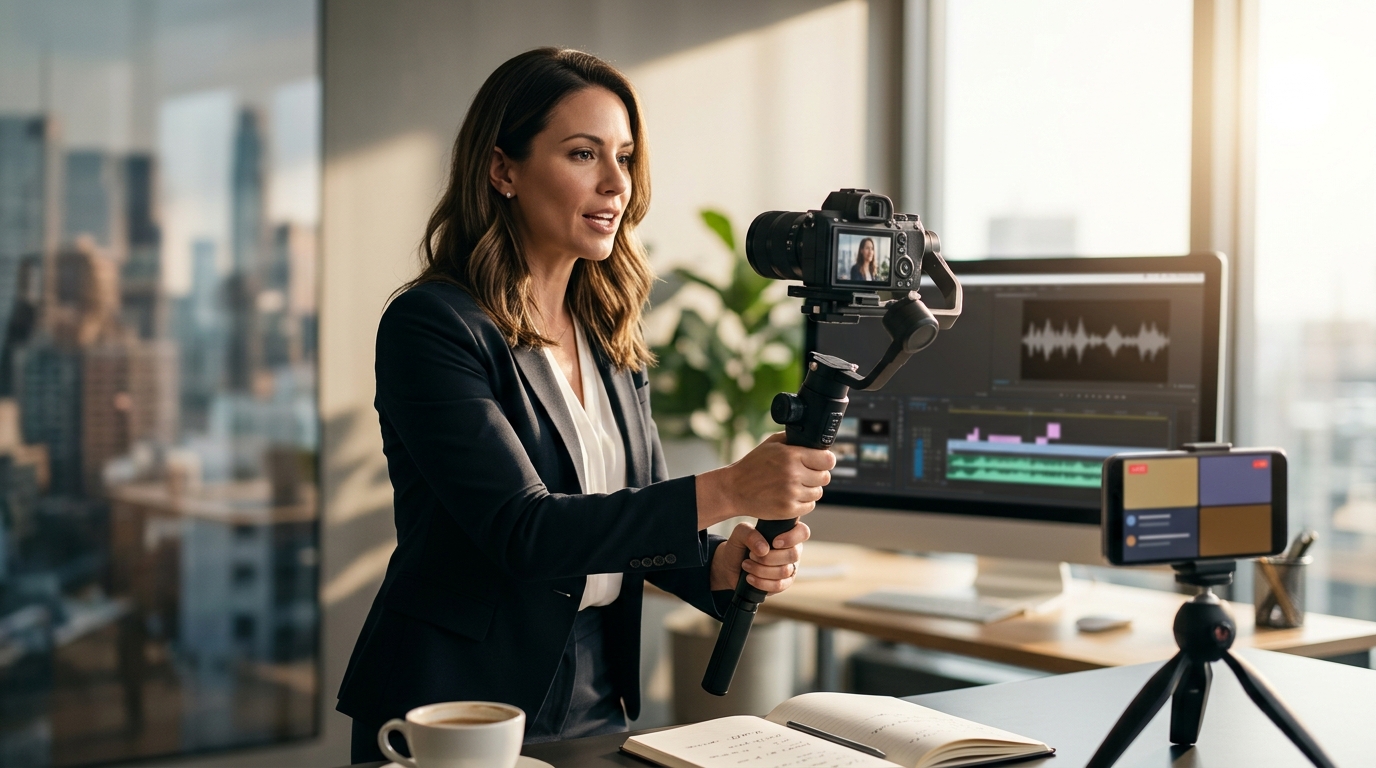
If you have ever wondered whether video marketing can truly help your business increase its online presence, the answer is a resounding yes. Video is no longer an optional add-on to your digital strategy. It is the backbone of how audiences discover, trust, and buy from brands online. From boosting your search rankings to driving engagement across social platforms, video content delivers measurable results that text and static images simply cannot match. In this guide, we break down the data, share real-world examples, and show you exactly how to leverage video to grow your visibility.
What Is Video Marketing?
Video marketing is the strategic use of video content to promote a brand, product, or service across digital channels. It encompasses everything from short-form social clips and explainer videos to long-form webinars and positioning videos on your website. Unlike static content, video combines visuals, audio, and storytelling to create emotional connections that convert viewers into buyers.
A positioning video is a professionally produced video on your website that communicates who you are, what you do, and why your audience should trust you. According to Inspired Living's IT Factor program, videos on landing pages can boost conversion rates by up to 80%.
The Statistics That Prove Video Increases Online Presence
The data supporting video marketing is staggering. According to Wyzowl's 2026 report, 91% of businesses now use video as a marketing tool, and 93% of video marketers consider it an important part of their overall strategy. These are not fringe adopters. Video has become standard business infrastructure.
Here is how the numbers break down:
| Metric | Statistic | Source |
|---|---|---|
| Businesses using video | 91% | Wyzowl 2026 |
| Marketers reporting positive ROI | 82% | Wyzowl 2026 |
| Video's share of internet traffic | 82% | DemandSage 2026 |
| Consumers convinced to buy after watching brand video | 84% | Wyzowl / Inspired Living |
| Increase in web traffic attributed to video | 82% of marketers | Wyzowl 2026 |
| Lead generation improvement | 85% of marketers | Wyzowl 2026 |
Additionally, 92% of marketers plan to spend the same or more on video in 2026, signaling that the investment trajectory is only going up. If your competitors are on video and you are not, you are effectively invisible to the majority of your market.
How Video Boosts Your Search Engine Rankings
Search engine optimization is one of the most powerful reasons to adopt video. Websites with video content are 53 times more likely to rank on the first page of Google search results, thanks to improved dwell time and engagement. When a visitor lands on your page and watches a video, they stay longer. Google interprets that extended session as a signal that your content is valuable, which pushes your page higher in results.
Video also increases click-through rates. Including a video in an email can boost click-through rates by up to 300%, driving more traffic back to your website. This creates a compounding effect: more traffic leads to better SEO signals, which leads to even more organic visibility.

Video and AI-Powered Search
As AI-driven search engines like Google's SGE become more prominent, video content gives you an additional advantage. Structured video with clear titles, descriptions, and transcripts is more likely to be surfaced in AI-generated answers, extending your reach beyond traditional search results.
Video and Social Media: Expanding Your Reach
Social media platforms heavily favor video in their algorithms. Social media videos garner 48% more views compared to other content formats. Platforms like TikTok and Instagram now drive 70% higher engagement with short-form clips, while YouTube remains the dominant platform for long-form discovery and education.
According to HubSpot's 2026 State of Marketing Report, the top three ROI-driving content formats are all video-based: short-form video (49%), long-form video (29%), and live-streaming video (25%). Entrepreneurs who want to be seen and known in their industry cannot afford to ignore these channels.
Platform Strategy Matters
A brand awareness strategy is a deliberate plan for increasing how recognizable and memorable your brand is to your target audience. Each social platform requires a different approach. Use YouTube for SEO-rich tutorials and thought leadership. Lean into Instagram Reels and TikTok for fast, personality-driven clips. Leverage LinkedIn for professional authority, especially in the B2B and coaching spaces. Inspired Living's video education resources offer practical tips on converting online fans into actual buyers across every platform.
Types of Video That Drive Visibility
Not all videos serve the same purpose. Here are the formats that deliver the strongest results for online presence:
Positioning Videos
These are the cornerstone videos on your website homepage or about page. They communicate your brand story, build trust immediately, and convert visitors into clients. A strong positioning video can replace hours of manual sales conversations.
Social Media Content
Short-form video is the most leveraged media format by marketers in 2026. Creating consistent, platform-native video content keeps your brand top of mind and feeds algorithms that reward regular posting.
Testimonial and Case Study Videos
Nothing builds trust faster than hearing real clients share their results. Video testimonials combine social proof with emotional storytelling, making them one of the highest-converting formats available. Inspired Living clients like Tonya Fairley went from being invisible online to having a positioning video on her website that actively converts new clients.
Real Results: Entrepreneurs Who Transformed Their Brands
The impact of video marketing is not theoretical. Keri Murphy, founder of Inspired Living, has spent over three decades on camera and more than 13 years helping entrepreneurs leverage video to grow their businesses. Her signature IT Factor Method focuses on Mindset, Messaging, Marketing, Media, and Monetization.
Consider these transformations from the Inspired Living community: Angel transformed from trading hours for money to building a multi-service wellness resource center using video to capture her expertise. Holly went from freezing on camera to becoming a featured TV contributor with a podcast, a TV series, and an e-learning course. Molly landed her first ideal client from just one video and later appeared on the Andy Cohen Show.
These are not outliers. They represent what happens when entrepreneurs commit to showing up on camera with the right strategy and support behind them.
Key Takeaways
- Video marketing is used by 91% of businesses in 2026 and delivers positive ROI for 82% of marketers.
- Websites with video are 53 times more likely to appear on Google's first page.
- Video accounts for 82% of all internet traffic, making it the dominant content format online.
- The top three ROI-driving content formats are all video-based: short-form, long-form, and live-streaming.
- A positioning video on your website can increase conversions by up to 80%.
- 84% of consumers say a brand's video convinced them to purchase a product or service.
- Investing in on-camera confidence and strategic messaging multiplies the impact of every video you create.
Frequently Asked Questions
Can video marketing really increase my online presence?
Absolutely. Video improves search rankings, increases time on site, drives social engagement, and builds brand trust. Data from Wyzowl shows that 82% of video marketers report increased web traffic directly from video.
What type of video should I create first?
Start with a positioning video for your website. This is the single most impactful video for establishing credibility and converting visitors. The IT Factor Method helps entrepreneurs create exactly this kind of video.
How does video help with SEO?
Video increases dwell time on your pages, which signals quality to search engines. Websites with video content are 53 times more likely to rank on Google's first page. Adding transcripts and optimized descriptions further boosts discoverability.
Do I need professional equipment to start?
No. Many successful entrepreneurs start with a smartphone and natural lighting. What matters most is your message, your confidence, and your consistency. Professional production elevates quality, but it should not be a barrier to starting.
Which social platforms are best for video marketing?
YouTube, Instagram, Facebook, and LinkedIn are the top-performing platforms for video marketers in 2026. Your choice should depend on where your ideal audience spends time. LinkedIn is especially effective for coaches, consultants, and B2B service providers.
How long should my marketing videos be?
Most marketers find that videos between 30 seconds and 2 minutes are most effective for social media. Positioning videos and webinars can run longer because the viewer intent is different. Match your video length to the platform and purpose.
What ROI can I expect from video marketing?
According to Wyzowl, 82% of video marketers report a positive return on investment. Video also generates leads (85% of marketers), increases brand awareness (93%), and directly drives sales (83%).
I am not confident on camera. Can I still succeed with video?
Yes. On-camera confidence is a skill that can be learned. Programs like Inspired Living's Luminary Leadership are specifically designed to help entrepreneurs overcome camera fear and develop a magnetic on-screen presence.
Ready to Increase Your Online Presence with Video?
The evidence is clear: video marketing is the most effective way to grow your visibility, build trust, and convert your audience into paying clients. If you are ready to stop being the best-kept secret in your industry, it is time to take action.
Book a complimentary visibility strategy call with the Inspired Living team to explore your goals, get clarity on your next steps, and discover how the IT Factor Method can help you be seen, be known, and be paid for your brilliance.