

How to Measure the Success of a Video Marketing Campaign
You invested time, energy, and budget into video content for your business. But how do you know if it is actually working? Measuring video marketing success goes far beyond counting views. It means tracking the specific metrics that connect your videos to real business outcomes like leads, sales, and brand authority. Whether you are publishing on YouTube, LinkedIn, or Instagram, the right key performance indicators (KPIs) tell you what to keep doing and what to change. In this guide, we break down the essential metrics every entrepreneur needs to track, plus the tools and frameworks that make measurement simple and actionable.
Why Measuring Video Marketing Matters
Video is no longer optional for entrepreneurs. According to Wyzowl's 2026 data, 91% of businesses now use video as a marketing tool. Yet many entrepreneurs still rely on vanity metrics like view counts without connecting them to revenue.
The disconnect is real. According to Wyzowl's 2026 report, 82% of marketers say video delivers strong ROI, but only 32% track bottom-line sales impact. If you are serious about using video in your marketing strategy, measurement is what separates guessing from growing.
Step 1: Define Clear Campaign Goals First
Before you open any analytics dashboard, get clear on what success looks like for each video. A KPI is a quantifiable value used to measure the effectiveness of a specific marketing campaign. Different goals demand different metrics.
Match Goals to Funnel Stages
Awareness campaigns focus on reach and impressions. Consideration-stage videos prioritize watch time and engagement rate. Bottom-funnel content should be measured by click-through rate and conversions. The IT Factor Method™ taught at Inspired Living focuses on Mindset, Messaging, Marketing, Media, and Monetization, giving entrepreneurs a framework that naturally aligns video goals with business outcomes.
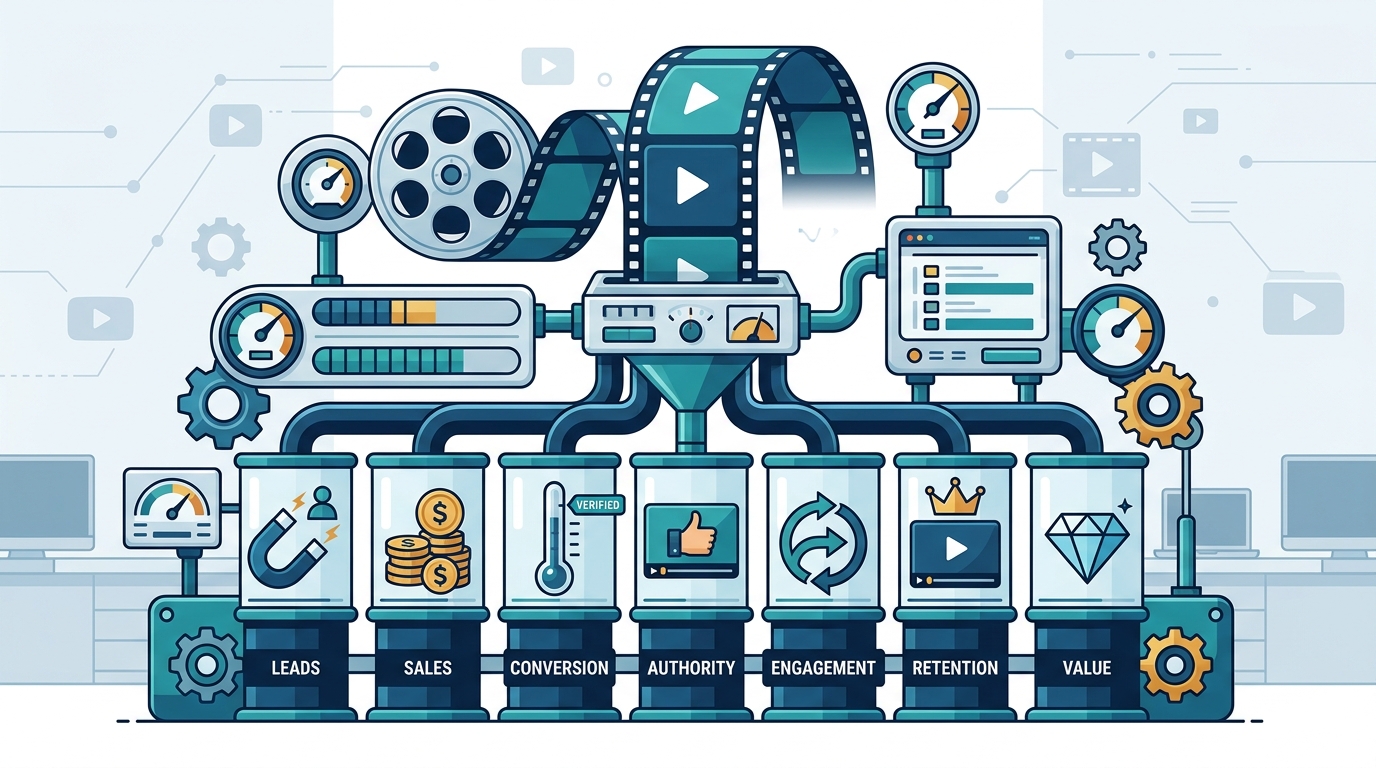
One Video, One Primary KPI
A brand storytelling video is measured by reach and sentiment. A product walkthrough is measured by CTR and conversion. Trying to optimize for everything at once dilutes your focus and your results.
Step 2: Track Awareness Metrics
Awareness metrics tell you how many people your video reached. These are your top-of-funnel indicators.
Reach is the total number of unique users who saw your video. Impressions measure how many times your video was displayed, including repeat views. According to Wistia's 2025 State of Video Report, the average video reaches about 33.8% of a brand's following on Instagram.
High impressions with low reach means the same people see your content repeatedly. That is great for brand recall but wasteful for awareness campaigns. If you want to understand how visibility drives business growth, explore Keri Murphy's approach to building authority through video.
Step 3: Measure Engagement and Retention
Engagement metrics reveal whether people actually care about your content once they start watching.
Watch Time and Average View Duration
Average view duration is the mean amount of time viewers spend watching your video. Platforms like YouTube and Facebook heavily weight this metric in their algorithms. A strong benchmark is 50 to 60% of total video length.
Engagement Rate
Engagement rate is the percentage of viewers who interact with your video through likes, comments, shares, or saves. According to the Social Media Examiner 2025 report, 87% of marketers say video drives more engagement than other content types on social media. Short-form videos under 60 seconds generate 2.5x more engagement per impression than any other content format.
If engagement is low, the issue often traces back to messaging and on-camera confidence. That is exactly what the Convert On-Camera Training at Inspired Living addresses.
Step 4: Monitor Conversion Metrics
Conversion metrics connect your video performance directly to revenue. These are the numbers that prove ROI.
| Metric | What It Measures | Benchmark |
|---|---|---|
| Click-Through Rate (CTR) | Percentage of viewers who click a link or CTA | 0.8%+ for LinkedIn B2B video |
| Conversion Rate | Percentage of viewers who complete a desired action | 5-10% from gated video assets |
| Cost Per Lead (CPL) | Ad spend divided by number of leads generated | Varies by industry |
| Landing Page Dwell Time Uplift | Increase in time on page when video is present | 80%+ increase |
| View-Through Rate (VTR) | Percentage of viewers who watch 30 seconds or more | 18-30% prospecting; 30-45% remarketing |
Videos on landing pages can boost conversion rates by up to 80%. Websites with video content are 53 times more likely to rank on the first page of Google, thanks to improved dwell time and engagement. These are the numbers that matter when proving video's value to your business.
Step 5: Understand Platform-Specific Differences
Not all views are created equal. Each platform counts and reports metrics differently, so comparing across platforms without context is misleading.
On YouTube, someone needs to watch for about 30 seconds before it counts as a view. Facebook registers a view after just 3 seconds. TikTok counts a view the moment your video starts to play. This means 10,000 views on TikTok and 10,000 views on YouTube represent very different levels of attention.
Choose KPIs based on where your audience lives. Use YouTube for long-form discovery and SEO. Lean into Instagram Reels for branded storytelling. Test Facebook for remarketing and older demographics. Entrepreneurs who want to master multi-platform visibility should check out the Keri Murphy Show on ILTV for actionable strategies.
Step 6: Use the Right Reporting Tools
Manual KPI tracking across multiple platforms is time-consuming and error-prone. The right tools centralize your data so you can focus on optimization instead of spreadsheets.
Native Platform Analytics
YouTube Studio, Meta Business Suite, and LinkedIn Analytics are free and provide most core metrics. Start here before investing in third-party tools.
Third-Party Dashboards
Tools like Google Analytics 4, Wistia, and Vidyard offer deeper insights including heatmaps, viewer-level tracking, and CRM integrations. For entrepreneurs scaling their video presence, these tools help you see exactly which videos drive pipeline and revenue.
Entrepreneurs who have gone through the Inspired Living program, like those featured in the client success stories, consistently report that measuring and iterating on their video strategy was the turning point for converting viewers into buyers.
Key Takeaways
- Always define your campaign goal before selecting which KPIs to track.
- Awareness metrics (reach, impressions) differ from conversion metrics (CTR, conversion rate, CPL).
- Watch time and engagement rate are the most algorithm-friendly metrics across platforms.
- Videos on landing pages can increase conversions by up to 80% and dwell time significantly.
- Platform view definitions vary wildly: 0 seconds on TikTok versus 30 seconds on YouTube.
- Only 32% of marketers track bottom-line sales impact from video, creating a massive competitive advantage for those who do.
- Use native analytics first, then layer in third-party tools as you scale.
Frequently Asked Questions
What is the most important video marketing KPI?
There is no single most important KPI. The right metric depends on your campaign goal. For awareness, track reach. For conversions, track CTR and conversion rate. Align your primary KPI with your business objective.
How many views does a successful video need?
View count alone does not determine success. A video with 500 views that generates 20 qualified leads outperforms a viral video with 100,000 views and zero conversions. Focus on outcomes, not vanity numbers.
How often should I review my video analytics?
Weekly or monthly reviews work best for most entrepreneurs. Regular tracking helps you identify trends early and make adjustments before wasting budget on underperforming content.
What is a good average view duration?
A strong benchmark is 50 to 60% of total video length. If viewers consistently drop off before the halfway mark, revisit your hook, pacing, or messaging.
Do I need expensive tools to measure video performance?
No. YouTube Studio, Meta Business Suite, and LinkedIn Analytics are free and provide robust data. Third-party tools like Wistia and Vidyard add depth but are not required to get started.
How does video affect my website's SEO?
Websites with video content are 53 times more likely to rank on the first page of Google search results, largely due to improved dwell time and lower bounce rates.
What is view-through rate (VTR)?
View-through rate is the percentage of viewers who watch your video ad for at least 30 seconds or to completion. For prospecting audiences, aim for 18-30%. Remarketing audiences typically achieve 30-45%.
How do I connect video metrics to actual revenue?
Use UTM parameters on video CTAs, integrate your video platform with your CRM, and track the buyer journey from first video view to closed deal. B2B companies report that video influences over 40% of their sales pipeline on average.
Ready to Turn Your Video Into Revenue?
Knowing what to measure is only half the equation. You also need videos that are worth measuring. If you are ready to show up on camera with confidence, craft messaging that converts, and build a video strategy tied to real business growth, explore Inspired Living's video marketing services and take the first step toward being seen, known, and paid for your brilliance.