

How to Create a Video Marketing Strategy That Resonates With Your Target Audience
Video is no longer optional for entrepreneurs who want to grow. In 2026, 91% of businesses use video as a marketing tool, and 93% of marketers call it an important part of their overall strategy. Yet most entrepreneurs still struggle to create videos that actually connect with the people they want to serve. The gap is not about equipment or editing skills. It is about strategy, messaging, and showing up authentically. Below you will find a step-by-step framework for building a video marketing strategy that speaks directly to your ideal audience and converts viewers into buyers.
Why Video Marketing Matters More Than Ever
A video marketing strategy is a goal-driven plan that outlines how you will use video content to attract, engage, and convert your ideal audience across specific platforms. It is the backbone of modern digital marketing, not a nice-to-have add-on.
The data backs this up. According to DemandSage, around 82% of all internet traffic is now video, and consumers spend an average of 17 hours per week watching online video. Meanwhile, Wyzowl reports that 82% of marketers say video has given them a positive ROI and 85% say it has helped generate leads.
For entrepreneurs, this means your audience is already watching video. The question is whether they are watching your videos. As the Inspired Living team puts it, the goal is to be seen, be known, and be paid for your brilliance.
Define Your Target Audience First
A target audience is the specific group of people most likely to buy your product or service based on shared demographics, pain points, and goals. Before you script a single video, you need clarity on who you are speaking to.
Create an Audience Profile
Document your ideal viewer's role, industry, biggest challenges, and the transformation they want. If you serve multiple segments, prioritize the one that generates the most revenue or has the clearest pain point.
Map Their Content Journey
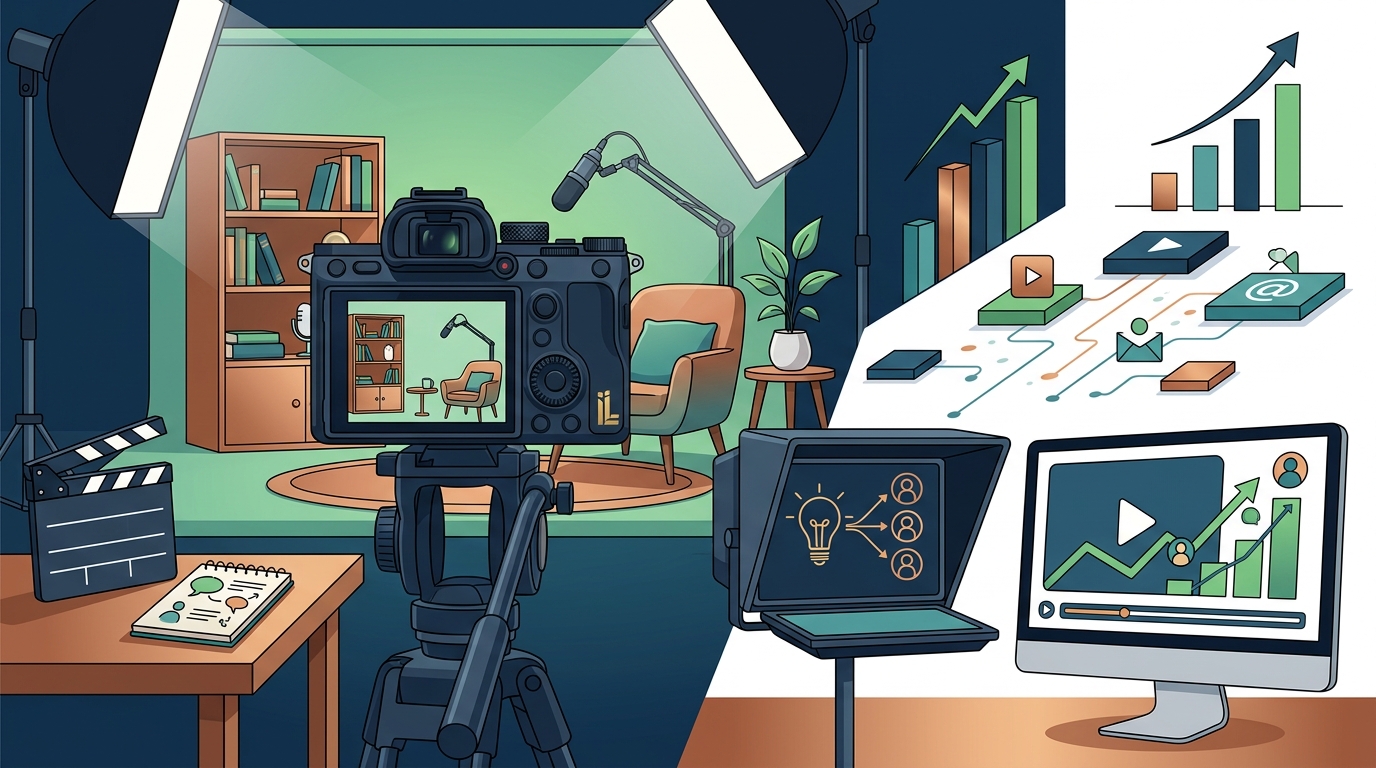
Different viewers need different things at different stages. Someone discovering you for the first time needs a short, value-packed clip. A warm lead considering your offer may need a longer testimonial or case study video. Entrepreneurs who have worked with Inspired Living's coaching programs often see dramatic shifts once they align video content with their buyer's journey.
Craft Magnetic Messaging
Messaging is the strategic language you use to communicate your unique value in a way that resonates emotionally with your ideal client. Without clear messaging, even the most polished video falls flat.
Lead With the Problem
Open every video by naming a specific pain point your audience recognizes. This is the hook that stops the scroll. The Convert On-Camera Training from Inspired Living teaches entrepreneurs how to make videos instantly stand out by grabbing the attention of right-fit buyers.
Position Yourself as the Guide
Share a concise insight or framework that proves you understand the problem deeply. Then offer a clear next step. This structure builds trust and authority in under two minutes.
Choose the Right Video Formats
Not all videos serve the same purpose. The most effective strategies in 2026 blend short-form and long-form content for complementary goals.
| Format | Best For | Ideal Length | Top Platform |
|---|---|---|---|
| Short-form Reels/Shorts | Brand awareness, reach | 15-60 seconds | Instagram, TikTok, YouTube Shorts |
| Explainer videos | Product/service education | 1-3 minutes | Website, YouTube |
| Live video | Real-time engagement, Q&A | 10-30 minutes | LinkedIn, Facebook, Instagram |
| Testimonial videos | Social proof, conversions | 1-2 minutes | Website, landing pages |
| Long-form tutorials | SEO, deep trust-building | 5-15 minutes | YouTube |
According to the HubSpot 2026 State of Marketing Report, short-form video delivers the highest ROI of any content format, while long-form video and live streaming round out the top three.
Pick Platforms That Match Your Audience
Your platform choice should follow your audience, not trends. LinkedIn is now the top video channel for B2B, with 8 in 10 teams using it as their primary video distribution platform according to Wistia's 2026 State of Video Report. YouTube remains dominant for search-driven discovery, and Instagram excels at community engagement.
Entrepreneurs in the Inspired Living Video Education library learn how to repurpose one core video across multiple platforms so nothing goes to waste. This multi-platform approach is exactly what separates visible brands from invisible ones.
Build On-Camera Confidence
Strategy means nothing if you freeze the moment the camera turns on. Many entrepreneurs struggle with this, and it is far more common than you think.
Keri Murphy, founder of Inspired Living and an on-camera veteran with appearances on MTV, E!, FOX, and NBC, developed the IT Factor Method™ specifically to solve this problem. The method focuses on five pillars: Mindset, Messaging, Marketing, Media, and Monetization. It has helped thousands of entrepreneurs craft compelling messages and turn visibility into revenue.
The key takeaway: confidence on camera is a skill, not a personality trait. It can be learned, practiced, and mastered with the right coaching.
Measure What Matters
Vanity metrics like view counts can be misleading. Focus instead on metrics tied to business outcomes.
Core Metrics to Track
- Watch time and retention rate: Do people stay past the first 10 seconds?
- Click-through rate: Are viewers taking the next step?
- Lead generation: How many new contacts did the video produce?
- Conversion rate: Did viewers become paying clients?
- Social engagement: Comments and shares signal resonance more than likes.
According to Wistia, social engagement is the fastest-rising video success metric in 2026, nearly doubling its share among marketers from the previous year. Analyze your campaigns weekly to spot what resonates and double down on those themes.
Key Takeaways
- Define your target audience before you create a single video. Clarity drives relevance.
- Lead every video with a specific pain point your viewer instantly recognizes.
- Blend short-form and long-form video to cover both awareness and conversion goals.
- Choose platforms based on where your ideal clients already spend time, not where everyone else posts.
- On-camera confidence is trainable. Invest in coaching like the Luminary Leadership program to accelerate your growth.
- Measure engagement, leads, and conversions rather than vanity metrics like raw view counts.
- Repurpose one strong video across multiple platforms to maximize your reach without burning out.
Frequently Asked Questions
What is a video marketing strategy?
A video marketing strategy is a documented plan that defines your goals, target audience, messaging, video formats, distribution platforms, and success metrics. It ensures every video you create serves a clear business purpose.
How do I identify my target audience for video?
Start with your current best clients. Document their demographics, pain points, goals, and the language they use. Then create content that mirrors those insights back to them.
What type of video content gets the most engagement?
Short-form videos under 60 seconds achieve the highest engagement rates, around 50% according to industry data. However, long-form content performs better for lead generation and SEO.
How often should I post videos?
Consistency matters more than frequency. Posting one high-quality, strategically aligned video per week outperforms sporadic daily uploads with no clear message.
Do I need expensive equipment to start?
No. Smartphone cameras produce excellent quality. Focus your investment on lighting, audio, and your messaging strategy first. Production value matters less than authentic connection.
How long should my marketing videos be?
Most marketers agree that 30 seconds to 2 minutes is the sweet spot for most marketing videos. Match the length to the platform and the depth of your topic.
How can I get more confident on camera?
Practice regularly, script your opening line, and work with a coach. Programs like Inspired Living's Convert On-Camera Training are designed specifically to help entrepreneurs overcome camera anxiety and show up with authority.
What platforms should entrepreneurs prioritize for video?
LinkedIn and YouTube are the top-performing platforms for B2B entrepreneurs. Instagram and TikTok are stronger for consumer-facing brands. Choose based on where your ideal buyers already spend their time.
Ready to Build Your Video Strategy?
If you are ready to stop guessing and start showing up with a strategy that attracts your ideal clients, talk with the Inspired Living team about your visibility goals. Their signature IT Factor Method™ has helped thousands of entrepreneurs turn video into revenue. Book a free discovery call today and get clarity on your next steps.