

Video Marketing Strategy: How to Resonate With Your Target Audience
Video is no longer optional for entrepreneurs who want to grow. With 93% of businesses now using video as a marketing tool and 89% of consumers asking for more video from the brands they follow, the question is not whether you should use video but how to make it connect deeply with the people you want to serve. A video marketing strategy is a documented plan that aligns your video content with specific business goals, audience needs, and distribution channels. Below, you will find a practical, step-by-step framework for building a strategy that truly resonates, so you can be seen, be known, and be paid for your brilliance.
Why Video Marketing Matters More Than Ever
The data is overwhelming. According to Wyzowl's 2025 report, 95% of companies consider video marketing important, and 93% of marketers report a positive ROI. Video content is projected to account for 82% of all consumer internet traffic in 2025.
For entrepreneurs specifically, videos on landing pages can boost conversion rates by up to 80%, and websites with video are 53 times more likely to rank on Google's first page. These numbers make one thing clear: a strategic approach to video is essential for visibility and revenue.
Define Your Target Audience First
A target audience is the specific group of people most likely to benefit from and purchase your product or service. Before you press record, you need absolute clarity on who you are speaking to.
Build a Viewer Persona
Go beyond basic demographics. Document your ideal viewer's biggest frustrations, aspirations, and the language they use to describe their problems. As Keri Murphy teaches in her Convert On-Camera Training, standing out starts with niching down in a crowded marketplace.
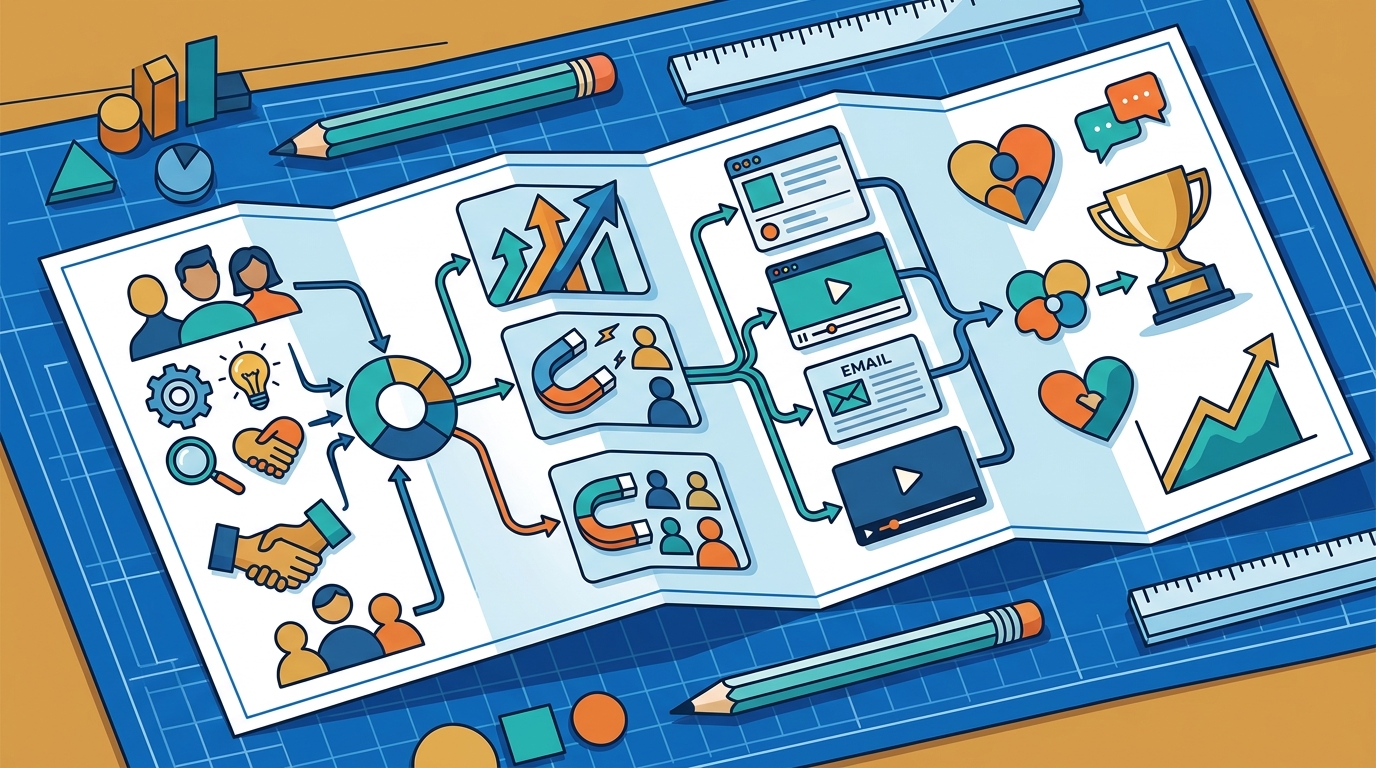
Map Their Content Consumption
Where does your audience spend time online? LinkedIn dominates for B2B, with 70% of video marketers now using the platform. Meanwhile, Gen Z and Millennials gravitate toward TikTok and Instagram Reels. Let your audience's habits dictate your distribution plan.
Craft Magnetic Messaging That Connects
Resonance starts with messaging. Your videos should speak directly to one viewer's problem and offer a clear path forward. Magnetic messaging is communication that draws your ideal audience in because it mirrors their internal dialogue.
The IT Factor Method™ from Inspired Living focuses on five pillars: Mindset, Messaging, Marketing, Media, and Monetization. Getting your message right means your audience feels understood before you ever make an offer.
Lead With Story, Not Features
People remember stories 22 times more than facts alone. Open your videos with a relatable scenario or client transformation. The Inspired Living client success stories show how entrepreneurs like Tonya, who went from invisible online to confidently on camera with a converting positioning video, create powerful proof through narrative.
Choose the Right Video Types for Each Stage
Not all videos serve the same purpose. Matching content type to the buyer's journey is critical for resonance.
| Funnel Stage | Best Video Type | Goal | Ideal Length |
|---|---|---|---|
| Awareness | Short-form social clips, Reels | Grab attention, build brand recognition | 30-60 seconds |
| Consideration | Explainer or how-to videos | Educate and build trust | 1-3 minutes |
| Decision | Testimonials, positioning videos | Overcome objections, convert | 1-2 minutes |
| Retention | Behind-the-scenes, live streams | Deepen loyalty and community | 5-15 minutes |
According to research, 73% of people say videos between 30 seconds and two minutes are the most effective. For deeper education, the Inspired Living Video Education hub breaks down the five essential videos every entrepreneur needs in their strategy.
Pick Platforms That Match Your Audience
A platform strategy is the deliberate selection of channels where your content will have the greatest impact on your specific audience.
Focus on Two to Three Channels
Spreading yourself thin across every platform dilutes your effort. If you serve professionals and high-ticket clients, LinkedIn and YouTube should anchor your plan. For lifestyle or wellness brands, Instagram and TikTok deliver stronger engagement. As highlighted on Inspired Living's Video Marketing Secrets, different channels attract different audiences, so repurposing content thoughtfully is key.
Optimize for Mobile and Accessibility
Over 75% of all video views happen on mobile devices. Always use vertical or square formats for social, add captions (50% of viewers watch without sound), and keep thumbnails clear and readable on small screens.
Show Up Confidently on Camera
Strategy means nothing if you freeze the moment the red light turns on. On-camera confidence is a skill, not a personality trait, and it can be developed with practice and the right coaching.
Keri Murphy, founder of Inspired Living, has spent over three decades on camera and over 13 years helping entrepreneurs master their on-camera presence through the IT Factor Method™. Her immersive two-day experience equips entrepreneurs with storytelling techniques, personal branding clarity, and professional video assets they can use immediately.
The bottom line: your audience connects with authenticity. Showing up as yourself, with clarity and confidence, builds trust faster than any polished ad ever could.
Measure, Optimize, and Repurpose
Publishing a video is only the beginning. Track these key performance indicators to understand what resonates:
- View-through rate (VTR): Are viewers watching to the end?
- Engagement rate: Likes, comments, shares, and saves signal relevance.
- Click-through rate (CTR): Measures whether your call to action is working.
- Conversion rate: How many viewers take the desired next step?
A good benchmark for a targeted campaign is a 5-10% conversion rate from a gated video asset. Review your analytics monthly and double down on what works. Then repurpose your best-performing videos into blog posts, audiograms, quote graphics, and email content to extend their lifespan.
Key Takeaways
- Start with a clearly defined target audience before creating any video content.
- Align your messaging to your viewer's internal dialogue for immediate resonance.
- Match video types to each stage of the buyer's journey for maximum impact.
- Focus on two to three platforms where your ideal audience actually spends time.
- Invest in on-camera confidence; it is a learnable, revenue-generating skill.
- Track VTR, engagement, CTR, and conversions to continuously improve.
- Repurpose top-performing videos across channels to maximize your content investment.
Frequently Asked Questions
What is a video marketing strategy?
A video marketing strategy is a structured plan that outlines what video content you will create, who it is for, where you will distribute it, and how you will measure its success. It connects your business goals to the videos you produce.
How long should my marketing videos be?
Research shows that 73% of people find videos between 30 seconds and two minutes the most effective. Short-form videos under 60 seconds perform best on social media, while longer explainer or training content can run three to fifteen minutes.
Which platforms are best for video marketing in 2025?
The best platform depends on your audience. LinkedIn has become the most widely used platform for video marketing among professionals. YouTube remains the world's second-largest search engine with over 2.5 billion global users. TikTok and Instagram Reels dominate for younger demographics.
How do I overcome fear of being on camera?
On-camera confidence is a skill that improves with practice and coaching. Programs like the IT Factor Method™ provide structured training in mindset, messaging, and presence so you can show up authentically without freezing.
What types of videos convert best?
Positioning videos on your website, client testimonial videos, and short explainer videos consistently drive the highest conversions. About 84% of people say a brand's video convinced them to buy a product or service.
How much should I budget for video marketing?
Nearly half of companies spend under $5,000 annually on video production. You can start with a smartphone and natural lighting, then reinvest revenue into professional production as your brand grows.
How often should I post video content?
Consistency matters more than frequency. Start with one to two videos per week on your primary platform. As you build a library and repurposing system, increase output based on your capacity and audience engagement data.
Can video really help my website rank higher on Google?
Yes. Websites with video content are 53 times more likely to appear on Google's first page because video improves dwell time and engagement, two factors search engines reward.
Ready to Build a Video Strategy That Converts?
If you are an entrepreneur ready to be seen, be known, and be paid for your brilliance, it is time to take the next step. Explore the IT Factor Method™ and discover how Inspired Living can help you show up on camera with confidence, create magnetic messaging, and turn viewers into buyers.