

How to Create a Video Marketing Strategy That Resonates With Your Target Audience
Video is no longer optional for entrepreneurs who want to grow. With 91% of businesses using video and 84% of consumers saying a brand's video convinced them to buy, the opportunity is massive. But posting random clips and hoping for results is not a strategy. A true video marketing strategy is a structured plan that aligns your message, platforms, and content types with the specific needs of your ideal audience. In this guide, you will learn how to build one from scratch so you can be seen, be known, and be paid for your brilliance.
Why Video Marketing Matters More Than Ever in 2026
The data is clear. According to Arcane Marketing, video is used by 91% of businesses and considered a core component of marketing strategy by 93% of marketers as of 2026. Almost 95% of internet users watch videos every month, per WordStream.
Websites with video content are 53 times more likely to rank on the first page of Google search results. Including a video in an email can increase click-through rates by up to 300%. These numbers are not hypothetical. They represent real advantages for entrepreneurs who commit to a video-first approach.
Step 1: Define Your Target Audience With Precision
A target audience is the specific group of people most likely to buy your product or service based on shared demographics, pain points, and goals. You cannot create content that resonates if you do not know who you are speaking to.
Identify Pain Points First
Start by listing the top three to five problems your ideal client faces. For example, many entrepreneurs know they should be using video but freeze the moment they press record. As Keri Murphy of Inspired Living teaches, the gap between knowing you need video and actually showing up confidently on camera is exactly where strategy begins.
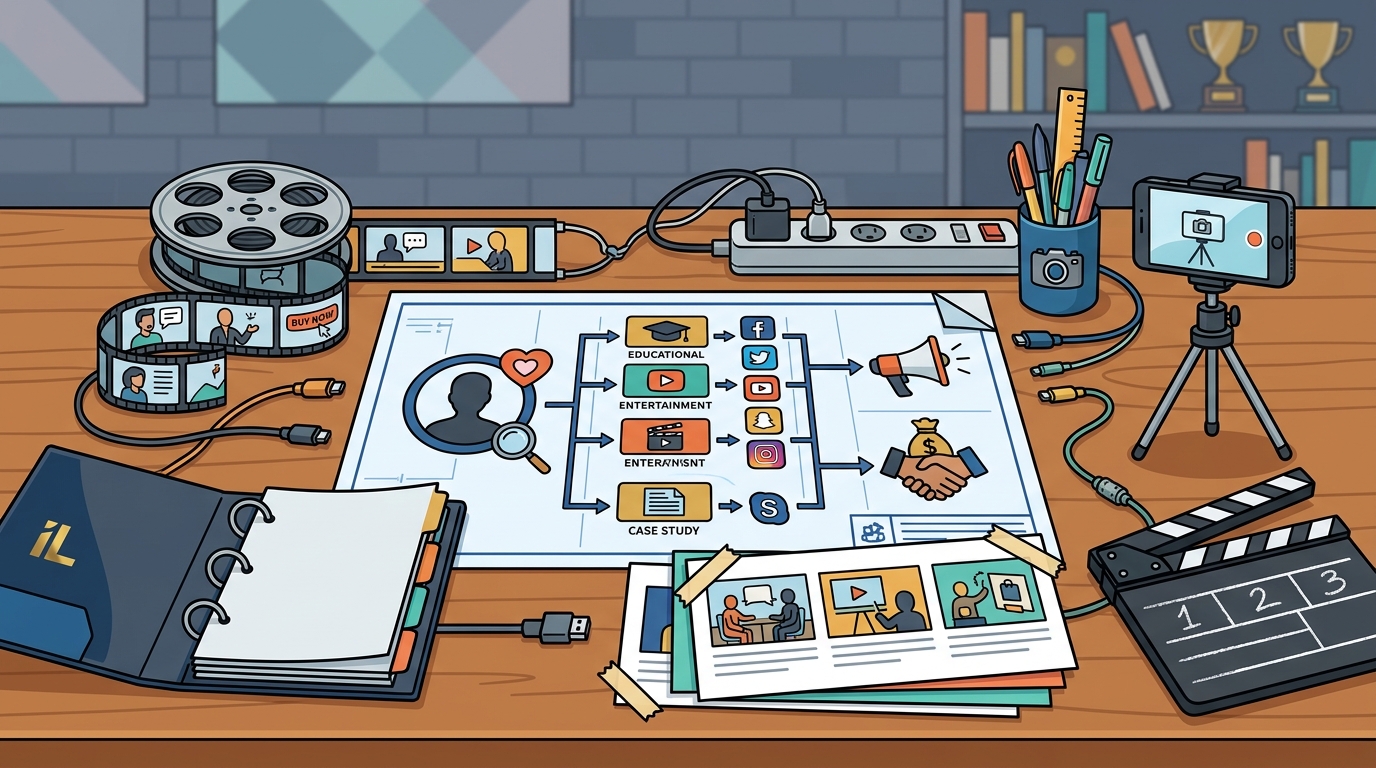
Build a Simple Audience Avatar
Document your ideal viewer's role, industry, goals, and preferred platforms. Are they coaches scrolling LinkedIn? Realtors watching YouTube tutorials? MedSpa owners browsing Instagram? The more specific, the better your content will land.
Step 2: Craft a Core Message That Connects
A core message is the single, memorable idea that communicates who you help, how you help them, and why it matters. Without one, even beautifully produced videos fall flat.
The IT Factor Method™ focuses on five pillars: Mindset, Messaging, Marketing, Media, and Monetization. Messaging sits at the center because your on-camera presence only works when your words land with the right people. Before you write a script, clarify your positioning statement in one to two sentences.
Step 3: Choose the Right Video Types for Each Goal
Not every video serves the same purpose. Map your content to the buyer journey so each piece moves viewers closer to becoming clients.
| Funnel Stage | Video Type | Goal | Ideal Length |
|---|---|---|---|
| Awareness | Short-form tips, Reels, Shorts | Grab attention, build brand awareness | 15-60 seconds |
| Consideration | Tutorials, behind-the-scenes, webinars | Establish expertise, nurture trust | 3-10 minutes |
| Decision | Testimonials, positioning videos, case studies | Overcome objections, convert | 1-3 minutes |
| Retention | Episodic series, Q&A, community content | Deepen loyalty, encourage referrals | 5-15 minutes |
Explore the five essential videos every entrepreneur needs to see how Inspired Living breaks these down for service-based businesses.
Step 4: Match Content to the Right Platforms
A platform strategy is a deliberate plan for tailoring your video format, tone, and pacing to each channel's unique audience expectations. According to Entrepreneur, a video that goes viral on YouTube can flop on TikTok, so simply reposting the same clip everywhere will not work.
Platform Quick Guide
- YouTube: Long-form tutorials and episodic content that builds deep expertise.
- Instagram Reels and TikTok: Short, hook-driven clips for awareness and reach.
- LinkedIn: Thought leadership and professional testimonials for B2B trust.
- Your Website: Positioning videos that can boost conversion rates by up to 80%.
Design for mobile-first, vertical consumption as your default, then adapt for platforms where horizontal makes sense.
Step 5: Use Storytelling to Build Trust
In 2026, audiences are overwhelmed with content. According to ImagineArt, around 87% of marketers reported increased dwell time for narrative-led video marketing. Stories outperform sales pitches because they create emotional connections.
The Broadcast Your Brilliance program teaches entrepreneurs to share their authentic story on camera so ideal clients feel an immediate connection. One Inspired Living client, Marcy Browe, went from hiding behind the lens to creating videos that consistently convert by leading with her personal narrative.
Start every video with the problem your audience is trying to solve. Then show a believable path to a better outcome. Keep it real, keep it specific, and let your personality shine through.
Step 6: Measure What Actually Matters
Views are a vanity metric. In 2026, sophisticated marketers track engagement depth: watch time, completion rate, click-through rate, and conversion actions. A video with 2,000 views and 75% completion will outperform one with 10,000 views and 2% completion, as Shout Out Studio notes.
Metrics That Matter
- Completion rate: Are people watching to the end?
- Click-through rate: Are they taking the next step?
- Lead attribution: Which videos generate qualified inquiries?
- Revenue impact: Can you trace sales back to specific content?
Use UTM parameters, pixel tracking, and platform analytics to understand how video moves viewers through your funnel from awareness to conversion.
Key Takeaways
- A video marketing strategy starts with a clearly defined target audience and core message.
- Different video types serve different stages of the buyer journey, from short-form awareness clips to conversion-focused testimonials.
- Platform-specific optimization is essential; the same video will not perform equally on every channel.
- Storytelling and authenticity outperform polished but generic content every time.
- Track engagement depth (completion rate, CTR, lead attribution) instead of vanity metrics like views.
- Confidence on camera is a trainable skill, not a fixed trait. Programs like the IT Factor Method™ exist to help you develop it.
- Consistency beats perfection. Aim for regular publishing and refine as you learn what resonates.
Frequently Asked Questions
What is a video marketing strategy?
A video marketing strategy is a documented plan that outlines how you will use video content to attract, engage, and convert your target audience across specific platforms and funnel stages.
How do I find my target audience for video?
Start with your existing client data. Identify common demographics, pain points, and goals. Then research which platforms they use most and what content formats they prefer.
Do I need expensive equipment to start?
No. A smartphone, good lighting, and clear audio are enough to begin. Quality content and a strong message matter far more than production budget.
How often should I post videos?
Aim for three to five short-form videos per week and one longer piece biweekly. Consistency signals reliability to both algorithms and audiences.
What types of videos convert best for entrepreneurs?
Positioning videos on your website, client testimonial videos, and educational content that addresses specific pain points tend to drive the strongest conversions for service-based businesses.
How long should my videos be?
It depends on the platform and goal. Short-form content (15 to 60 seconds) works for awareness. Tutorials and webinars (3 to 15 minutes) work for consideration and trust building.
How do I get confident on camera?
On-camera confidence is a skill you can develop with practice and coaching. Inspired Living's video education resources and the IT Factor Method™ are specifically designed to help entrepreneurs overcome camera anxiety.
Can I repurpose one video into multiple pieces of content?
Absolutely. A single 10-minute tutorial can be edited into five 60-second tips, each optimized for different platforms while maintaining story continuity. Learn more about repurposing content across channels.
Ready to Build a Video Strategy That Converts?
You have the brilliance. Now it is time to broadcast it. Explore the IT Factor Method™ and discover how Inspired Living helps entrepreneurs master their message, show up confidently on camera, and turn video into their most powerful revenue driver. Book a clarity call with the Inspired Living team today.