

How to Create a Video Marketing Strategy That Resonates With Your Target Audience
Video is no longer optional for entrepreneurs who want to grow. In 2026, 91% of businesses use video as a marketing tool, and 93% of marketers say it is an important part of their overall strategy. Yet many entrepreneurs still struggle with knowing what to say, who to say it to, and how to show up authentically on camera. The result? Videos that get views but not clients. This guide walks you through a proven process for building a video marketing strategy that actually connects with your ideal audience and converts viewers into buyers.
Why Video Marketing Matters More Than Ever in 2026
A video marketing strategy is a goal-driven plan that outlines how you will use video content to attract, engage, and convert your ideal audience. Without one, you are creating content in the dark.
The numbers tell a compelling story. According to HubSpot's 2026 State of Marketing Report, short-form video delivers the highest ROI of any content format. Meanwhile, 82% of video marketers report that video has given them a good return on investment, and 85% say it helps generate leads.
For entrepreneurs, this is massive. As the team at Inspired Living puts it, video creates high-trust assets that can sell for you around the clock, replacing the manual pitch cycle that keeps so many business owners stuck.
Step 1: Define Your Target Audience With Precision
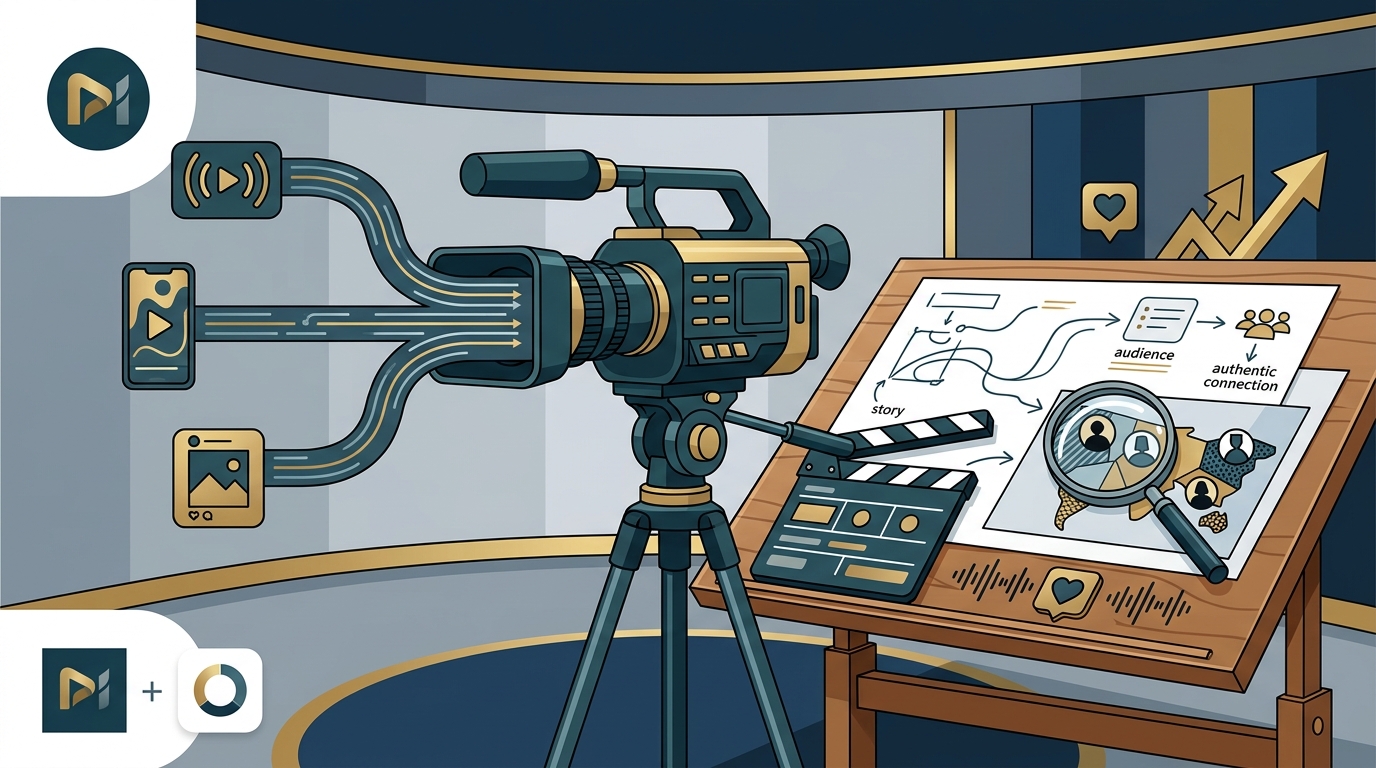
Every resonant strategy starts with knowing exactly who you are talking to. A target audience is the specific group of people most likely to buy your product or service based on shared demographics, behaviors, and pain points.
Create an Ideal Client Profile
Go beyond age and location. Identify what keeps your ideal client up at night, what transformation they crave, and where they spend time online. Entrepreneurs who work through the IT Factor Method™ at Inspired Living learn to pinpoint their "right-fit buyer" so every video speaks directly to that person.
Validate With Data
Use analytics from your existing social channels, email list, and website to confirm assumptions. According to HubSpot, a majority of marketers (66% B2B, 69% B2C) say the data they have about their target audiences is high quality. If yours is not, start collecting it before you hit record.
Step 2: Craft a Message That Creates Emotional Connection
Magnetic messaging is the ability to articulate your unique value in a way that immediately resonates with your audience and moves them to act. It is the bridge between expertise and revenue.
Keri Murphy, founder of Inspired Living, has helped over 100 entrepreneurs refine their on-camera messaging to convert viewers into clients. The pattern is consistent: when entrepreneurs hone a unique message that creates an emotional connection with their right-fit clients, results follow quickly.
Lead With Transformation, Not Features
Your audience does not care about your credentials first. They care about the outcome you deliver. Frame every video around the before-and-after story your client will experience.
Step 3: Choose the Right Video Formats
Not all video formats serve the same purpose. A smart strategy uses multiple formats at different stages of the buyer journey.
| Format | Best For | Ideal Length | Stage |
|---|---|---|---|
| Short-form Reels/Shorts | Brand awareness, reach | 15-60 seconds | Top of Funnel |
| Educational/How-To | Building authority | 2-5 minutes | Middle of Funnel |
| Testimonial Videos | Social proof, trust | 1-3 minutes | Bottom of Funnel |
| Webinars/Live Streams | Deep engagement, lead gen | 30-60 minutes | Middle/Bottom |
| Positioning/Brand Video | Website conversions | 1-2 minutes | Bottom of Funnel |
Short-form video is the most popular content format among marketers and delivers the highest ROI, according to HubSpot's 2026 data. But longer explainer videos and product videos still play a major role in conversion, especially on landing pages. The best strategies use both.
Step 4: Pick the Platforms That Match Your Audience
Every platform has distinct audience expectations and algorithmic preferences. Spreading yourself thin across every channel dilutes your impact.
Where Entrepreneurs See Results
According to Wyzowl, video marketers favor YouTube, Instagram, Facebook, LinkedIn, and webinars as their top-performing channels. For B2B entrepreneurs specifically, LinkedIn is now the number-one video channel, with 8 in 10 teams naming it their primary place to share videos according to Wistia's 2026 State of Video Report.
If your ideal clients are high-ticket buyers or corporate decision-makers, prioritize LinkedIn and YouTube. If you serve consumers, Instagram Reels and TikTok deserve your focus. Inspired Living's Video Marketing Secrets series breaks down how to adapt your content by channel.
Step 5: Show Up Confidently on Camera
Strategy means nothing if you freeze the moment you press record. On-camera confidence is a skill, not a personality trait, and it can be developed with practice and the right coaching.
Many entrepreneurs experience what Inspired Living calls the "record button freeze," where confidence fades, words escape, and self-consciousness takes over. Their Convert On-Camera Training is specifically designed to help consultants, realtors, coaches, and service providers break through that barrier.
Three Quick Confidence Boosters
First, script your opening line and closing call-to-action so you start and end strong. Second, talk to one person (your ideal client), not a crowd. Third, keep most videos between 30 seconds and 2 minutes to reduce pressure and match audience preferences.
Step 6: Repurpose and Distribute Strategically
Creating one great video should not be the end of your workflow. Content repurposing is the practice of adapting a single piece of content into multiple formats for different platforms and audiences.
A 10-minute YouTube video can become three short-form clips, a carousel of key quotes, and an email newsletter topic. This approach is essential when time is limited. Inspired Living's Video Education hub covers how to repurpose content across channels without starting from scratch.
AI tools are accelerating this process. In 2026, 63% of video marketers have used AI tools for video creation or editing, up from 51% in 2025. Use AI to speed up scripting, editing, and caption generation, but keep the human element in your on-camera delivery and brand voice.
Key Takeaways
- A video marketing strategy must start with a clearly defined target audience and a message tailored to their specific pain points.
- 91% of businesses now use video marketing. Standing out requires intentional strategy, not just more content.
- Short-form video delivers the highest ROI, but longer formats drive deeper engagement and conversions on landing pages.
- LinkedIn has become the top video channel for B2B marketers. Choose platforms based on where your ideal clients spend time.
- On-camera confidence is trainable. Invest in coaching to remove the biggest bottleneck in your video strategy.
- Repurpose every video into multiple content pieces to maximize reach without multiplying your workload.
- AI tools can reduce production costs by up to 40%, but strategy and authentic delivery still require a human touch.
Frequently Asked Questions
What is a video marketing strategy?
A video marketing strategy is a structured plan that defines your goals, target audience, messaging, video formats, distribution platforms, and metrics for success. It ensures every video you create serves a purpose and moves viewers toward becoming clients.
How long should my marketing videos be?
Most marketers find videos between 30 seconds and 2 minutes to be most effective. Short-form content under 60 seconds achieves around a 50% engagement rate, while longer content works best for deep-dive education and webinars.
Which platform is best for video marketing in 2026?
It depends on your audience. YouTube remains the dominant platform overall, but LinkedIn is now the top choice for B2B video marketing. Instagram and TikTok lead for consumer-facing brands, particularly with short-form content.
How do I overcome fear of being on camera?
On-camera confidence develops through practice and structure. Start by scripting your opening hook, speak to one ideal client rather than a crowd, and consider working with a coach. Programs like the IT Factor Method™ are specifically designed to build this skill.
How often should I post video content?
Consistency matters more than frequency. Start with a pace you can sustain, whether that is one video per week or three. Publishing on a regular schedule trains the algorithm and your audience to expect your content.
What types of videos convert best for entrepreneurs?
Testimonial videos, positioning brand videos, and educational how-to content tend to drive the highest conversions for service-based entrepreneurs. Videos on landing pages can boost conversion rates by up to 80%.
Can I use AI to create my video content?
Yes, AI is useful for scripting, editing, caption generation, and repurposing. However, your on-camera presence and authentic voice are what build trust. Use AI as a workflow multiplier, not a replacement for showing up as yourself.
How do I measure video marketing ROI?
Track metrics tied to your business goals: views and reach for awareness, click-through rates for engagement, and leads or sales generated for conversion. About 44% of marketers analyze campaign performance weekly to stay agile.
Ready to Build a Video Strategy That Converts?
If you know video is the key to growing your business but struggle with where to start, what to say, or how to show up confidently on camera, you are not alone. Keri Murphy and the Inspired Living team have helped thousands of entrepreneurs become seen, known, and paid for their brilliance through the power of video. Book a clarity call today to explore your visibility goals and discover the most aligned path forward for your brand.