
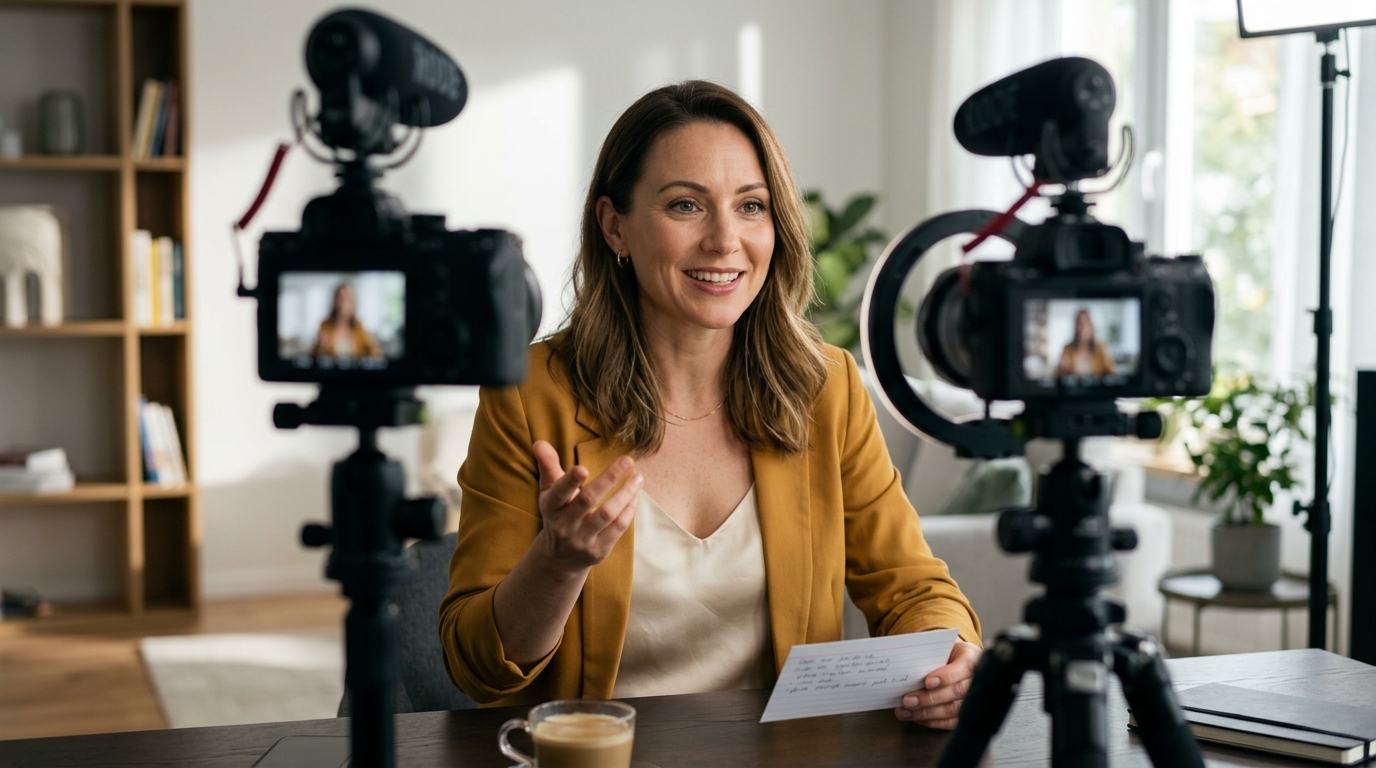
On-Camera Delivery Tips: How Business Owners Can Connect Authentically on Video
Video is no longer optional for entrepreneurs who want to grow their brand. According to Wyzowl's 2026 report, 91% of businesses now use video as a marketing tool, and 93% of video marketers say it has helped increase brand awareness. Yet many business owners still freeze the moment they hit record. The good news? On-camera confidence is a learnable skill, not a personality trait. In this guide, you will discover proven strategies to improve your delivery, speak with clarity, and build genuine connection with your audience through video.
Why On-Camera Presence Matters for Your Business
On-camera presence is the ability to communicate your message with confidence, warmth, and clarity through video. It is the single fastest way to build trust at scale because viewers feel like they know you before they ever speak with you.
The data backs this up. According to Wyzowl, 83% of video marketers say video has directly increased sales, and 89% of consumers say video quality impacts their trust in a brand. For entrepreneurs who want to leverage video to grow their business, showing up authentically on camera is not a nice-to-have. It is a revenue driver.
| Metric | Percentage | Source |
|---|---|---|
| Businesses using video marketing | 91% | Wyzowl 2026 |
| Marketers who say video increased brand awareness | 93% | Wyzowl 2026 |
| Video marketers reporting direct sales increase | 83% | Wyzowl 2026 |
| Consumers who say video quality affects brand trust | 89% | Wyzowl 2026 |
| People convinced to buy after watching a brand video | 87% | Wyzowl 2025 |
| Marketers who report positive video ROI | 93% | Wyzowl 2025 |
Start with a Mindset Shift
The biggest barrier to great on-camera delivery is not equipment or lighting. It is what happens between your ears. Fear of judgment, perfectionism, and self-consciousness keep talented business owners invisible.
Keri Murphy, CEO of Inspired Living and a media expert with over 30 years of on-camera experience, built her signature IT Factor Method™ around five pillars: Mindset, Messaging, Marketing, Media, and Monetization. Mindset comes first for a reason. When you shift your focus from "How do I look?" to "How can I serve my audience?", nervousness transforms into purposeful energy.
Reframe the Camera as a Person
Instead of thinking of the camera as a judging audience, imagine you are speaking to one ideal client who needs your help right now. This reframe immediately softens your tone and makes your delivery feel like a conversation, not a performance.
Prep Your Message Without Over-Scripting
Over-scripting is one of the most common mistakes entrepreneurs make on camera. Reading a word-for-word script makes you sound robotic and disconnects you from your audience. A bullet-point outline is a simple framework of key talking points that lets you speak naturally while staying on track.
The Bullet-Point Method
Write three to five key points you want to cover. Practice speaking from those bullets rather than memorized sentences. This approach keeps your delivery conversational and allows your personality to come through.
Lead with One Core Message
Trying to cover too much in a single video creates a rushed, unfocused feel. Pick one clear takeaway per video. Your audience will remember it, and you will feel more confident delivering it. For guidance on structuring video content that converts, explore Inspired Living's Video Marketing Secrets.
Master Body Language and Eye Contact
Body language is the nonverbal communication that makes up the majority of how your message is received on screen. On camera, small adjustments create a big impact.
Look Into the Lens
Eye contact through the camera lens creates the feeling that you are speaking directly to each viewer. It builds instant rapport. Resist the urge to look at your own image on screen; instead, focus on the camera as though it were a friend sitting across from you.
Use the Rule of Thirds for Framing
Position yourself so your body fills about two-thirds of the frame, with a small amount of space above your head. This framing looks professional and conveys confidence without feeling distant or overly close.
Set Up Your Environment for Success
Your physical setup affects both how you look and how you feel. A clean, well-lit space reduces distractions and helps you focus on delivery rather than worry about what is behind you.
Natural light from a window in front of you is the easiest upgrade. A ring light is a great backup for smaller spaces. Wear solid colors that make you feel like yourself, and minimize background clutter. These small changes signal professionalism and build viewer trust. The Convert On-Camera Training from Inspired Living covers exactly how to create a studio-ready setup from home.
Practice, Review, and Improve
Like any skill, on-camera delivery improves with repetition. The entrepreneurs who get the best results are the ones who commit to consistent practice, not perfection.
Record short practice videos on your phone. Watch them back, noting one thing you did well and one thing to improve. This review loop, similar to how athletes study game footage, builds self-awareness without self-criticism. Over time, your natural rhythm emerges and your delivery becomes effortless.
As Vimeo's on-camera guide notes, entrepreneur Ali Abdaal credits consistent camera practice with leveling up his confidence in every area of life.
Use Storytelling to Create Emotional Connection
Storytelling is the art of using personal experiences and relatable narratives to make your message memorable and emotionally resonant. Facts inform, but stories sell. When you share a real moment of struggle, breakthrough, or transformation, your audience sees themselves in your journey.
The success stories on Inspired Living illustrate this perfectly. Entrepreneurs like Tonya, who went from being invisible online to confidently creating positioning videos that convert, or Laurel, who went from hating the camera to hosting multiple podcasts and speaking on stages nationwide, show the power of stepping into authentic visibility.
Structure your video stories with a simple arc: the challenge you or your client faced, the turning point, and the result. This keeps viewers engaged and positions you as someone who understands their world.
Key Takeaways
- On-camera confidence is a skill you can develop, not a talent you are born with.
- Mindset comes first. Shift your focus from self-judgment to serving your audience.
- Use bullet-point outlines instead of full scripts to sound natural and relatable.
- Look directly into the camera lens to build eye contact and trust with viewers.
- Set up good lighting, clean framing, and comfortable clothing before you hit record.
- Practice consistently and review your footage to identify strengths and growth areas.
- Use storytelling to create emotional connection and make your message stick.
Frequently Asked Questions
How do I stop feeling nervous on camera?
Nervousness is normal, even for seasoned professionals. Focus on your purpose rather than your appearance. Take a few deep breaths before recording, and remind yourself that your audience wants to hear your message. With consistent practice, the nerves fade significantly.
Should I use a script or speak off the cuff?
Neither extreme works well. A full script tends to make you sound stiff, while winging it can lead to rambling. The best approach is a bullet-point outline that keeps you on track while allowing your natural personality to shine through.
What is the IT Factor Method™?
The IT Factor Method™ is Inspired Living's signature on-camera training framework built around five pillars: Mindset, Messaging, Marketing, Media, and Monetization. It is designed to help entrepreneurs show up confidently on video and convert viewers into clients.
How long should my videos be?
According to Wyzowl, 73% of consumers believe videos between 30 seconds and 2 minutes are most effective. Start with shorter videos to build your comfort level, then expand as your confidence grows.
Do I need expensive equipment to look professional on camera?
No. A modern smartphone, natural window light, and a clean background are enough to produce professional-looking video. Investing in a simple ring light and a clip-on microphone can elevate your quality further without a large budget.
How often should I post video content?
Consistency matters more than frequency. Posting one high-quality video per week is more effective than sporadic bursts. Build a sustainable rhythm you can maintain long term.
Can video really help me get more clients?
Absolutely. Wyzowl reports that 87% of people have been convinced to buy a product or service after watching a brand's video. Video accelerates the know-like-trust factor that drives purchasing decisions.
Ready to Show Up with Confidence?
If you are an entrepreneur who knows video is the next step but you are not sure how to show up authentically, you do not have to figure it out alone. Explore the IT Factor Method™ experience to master your on-camera presence, clarify your message, and start converting viewers into paying clients. Your brilliance deserves to be seen.