
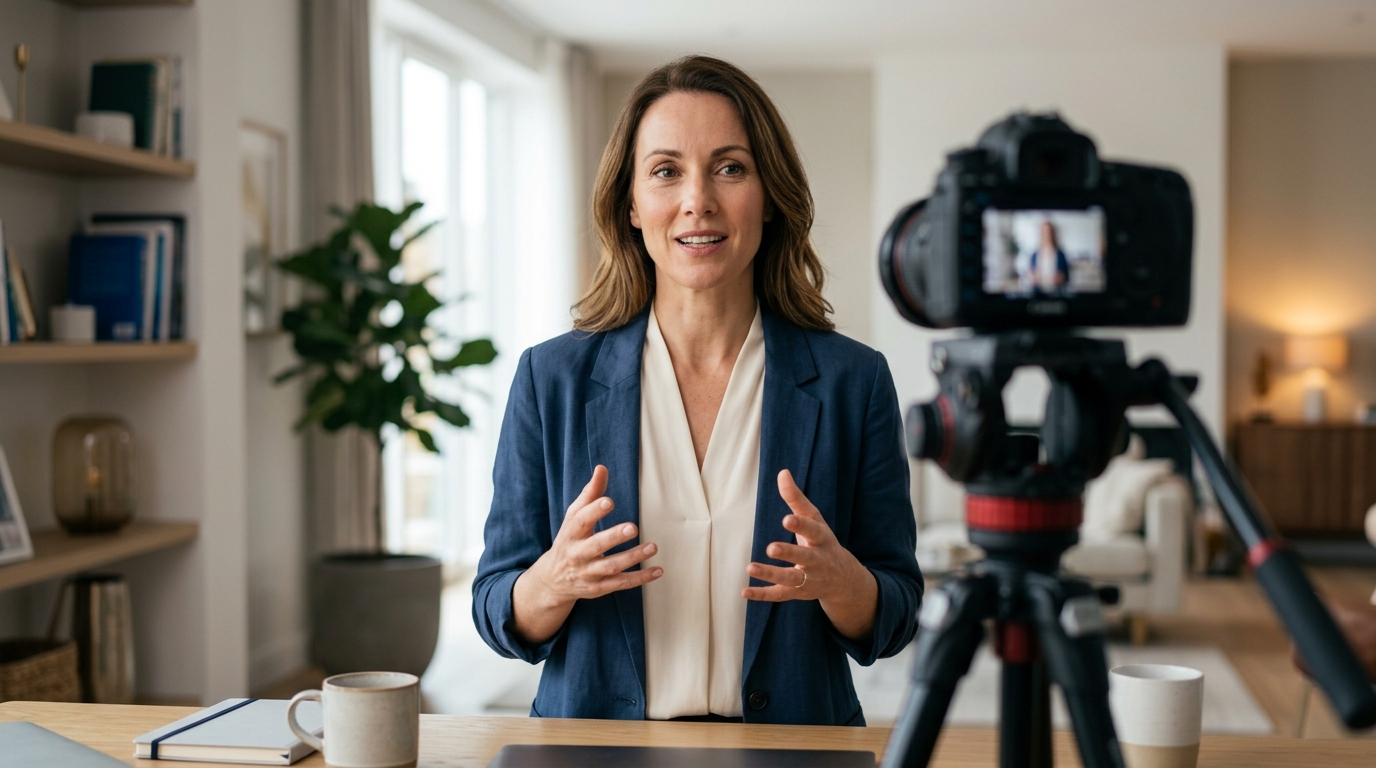
Video is no longer optional for business owners who want to stand out. With 93% of businesses now using video as a marketing tool and 87% of consumers saying a brand's video convinced them to make a purchase, showing up on camera with confidence and authenticity is one of the highest-leverage skills you can develop. Yet many entrepreneurs freeze the moment they press record. Their words vanish, self-doubt creeps in, and the final product feels stiff and disconnected. The good news? On-camera presence is a learnable skill, not an innate gift. Below you will find proven strategies to transform your delivery and build real audience connection.
Why On-Camera Presence Matters More Than Ever
Video content now accounts for over 82% of all consumer internet traffic, according to SellersCommerce's 2026 statistics roundup. That means your ideal clients are watching video before they ever book a call or visit your website. If you are not there, someone else is.
The numbers paint a clear picture. Landing pages featuring video can boost conversion rates by up to 80%, and websites with video are 53 times more likely to land on the first page of Google. As Inspired Living's IT Factor program highlights, showing up confidently on camera is no longer a nice-to-have for entrepreneurs; it is essential for revenue growth.
Start With Mindset, Not Equipment
On-camera confidence is the internal belief that your message matters enough to share publicly, even imperfectly. Many entrepreneurs sabotage their video efforts before they press record because they overthink how they look or sound.
Reframe the Fear
Camera anxiety is extremely common. Keri Murphy, founder of Inspired Living and a media expert with over three decades of on-camera experience, built her entire methodology around helping entrepreneurs move past this block. Her Broadcast Your Brilliance program includes step-by-step video confidence curriculum designed to help you master your message and boost on-camera presence.
Practice Before You Publish
Record short practice clips on your phone daily. Watch them back without judgment. Over a week, you will notice natural improvements in posture, pacing, and energy. This low-stakes repetition rewires your brain to treat the camera as a conversation partner rather than an audience of critics.
Craft a Message That Resonates
Authenticity on camera starts with clarity off camera. A positioning message is a concise statement that communicates who you help, what problem you solve, and why you are the right person to solve it. Without one, even the most polished delivery falls flat.
Use Storytelling to Build Trust
Research from Zebracat shows that 70% of viewers say they trust a brand more after watching a values-driven video, compared to just 40% who feel the same after reading a blog post. Stories that reveal your journey, your struggles, and your transformation create an emotional bridge between you and your viewer.
Speak to One Person
When scripting or outlining your video, imagine you are talking to a single ideal client sitting across a coffee table. This shift instantly makes your tone warmer and your language more conversational. The Video Marketing Secrets library on Inspired Living TV covers this concept in depth.
Master Your On-Camera Delivery
Delivery is the combination of vocal variety, body language, eye contact, and pacing that keeps a viewer watching past the first ten seconds. Over 50% of viewers decide within the opening moments whether to keep watching, so your first impression matters enormously.
| Common Mistake | Pro Technique | Impact on Viewer |
|---|---|---|
| Reading a script word-for-word | Use bullet-point outlines and speak naturally | Feels conversational, builds trust |
| Monotone voice | Vary pitch, speed, and volume deliberately | Holds attention, conveys passion |
| Looking away from the lens | Maintain eye contact with the camera lens | Creates personal connection |
| Stiff posture | Lean slightly forward and use hand gestures | Projects energy and confidence |
| Long, unbroken takes | Film in short segments; edit for pacing | Keeps content concise and watchable |
These techniques align with the on-camera training philosophy taught at Inspired Living's Convert On-Camera Training, which focuses on helping entrepreneurs stand out, grab attention, and convert engagement into revenue.
Connect Authentically With Your Audience
Authenticity on video is the practice of presenting your real personality, opinions, and expertise without performing a manufactured persona. A 2025 Teleprompter.com report found that 38% of consumers find real and relatable video content more memorable than highly produced advertisements.
Show Behind the Scenes
Behind-the-scenes videos improve brand relatability for 58% of viewers. Let your audience see your workspace, your prep process, or even your bloopers. This vulnerability creates loyalty that polished ads cannot replicate.
Embrace Imperfection
On LinkedIn, 78% of videos are now shot on smartphones rather than professional cameras. Your audience does not expect Hollywood production value. They expect honesty, expertise, and a reason to keep watching. As the success stories on Inspired Living demonstrate, entrepreneurs who once hated being on camera have gone on to launch courses, land TV spots, and attract dream clients once they stopped chasing perfection.
Choose the Right Video Format
Not every video needs to be the same length or style. Matching the format to your goal ensures better engagement and conversion.
| Format | Best For | Ideal Length |
|---|---|---|
| Positioning Video | Website homepage conversion | 60-90 seconds |
| Short-Form Reels/Shorts | Social media awareness | 15-60 seconds |
| Explainer Video | Product or service education | 1-2 minutes |
| Live Stream | Real-time audience engagement | 10-30 minutes |
| Testimonial Video | Social proof and trust building | 30-90 seconds |
Inspired Living's IT Factor Method typically starts clients with a positioning video for their website because it creates a 24/7 sales asset that converts visitors into buyers.
Key Takeaways
- On-camera confidence is a skill you build through consistent practice, not a trait you are born with.
- Mindset work must come before gear purchases; reframe the camera as a conversation, not a performance.
- A clear positioning message is the foundation of every effective video.
- Storytelling builds trust faster than polished production; 70% of viewers trust brands more after values-driven video.
- Short-form video delivers the highest ROI, but long-form content converts motivated viewers at even higher rates.
- Authenticity outperforms perfection; 38% of consumers prefer real and relatable content over highly produced ads.
- Start with one video format that matches your top business goal, then expand from there.
Frequently Asked Questions
What is the biggest mistake entrepreneurs make on camera?
Reading a script word-for-word. It removes natural inflection and eye contact. Instead, use a short bullet-point outline so your delivery sounds conversational rather than rehearsed.
Do I need expensive equipment to create effective business videos?
No. Research shows that 78% of LinkedIn videos are shot on smartphones. Good lighting, clear audio, and an authentic message matter far more than a professional camera setup.
How long should my videos be?
It depends on the platform and goal. Short-form content under 60 seconds earns the highest engagement on social media, while longer videos between 30 and 60 minutes achieve the highest conversion rates for viewers who are already engaged.
How do I overcome camera anxiety?
Start by recording short daily practice clips you never publish. Programs like Broadcast Your Brilliance provide structured coaching and community support specifically designed to build on-camera confidence for entrepreneurs.
What type of video should I create first?
A positioning video for your website. It introduces you, explains who you serve, and gives visitors a reason to take the next step. Inspired Living reports that this type of video can help your website convert over 82% better.
How often should I post video content?
Consistency beats volume. Start with one video per week and increase from there. Companies producing at least 20 videos per month see 30% higher engagement, but quality and regularity matter more than hitting a specific number early on.
Can video really help me get found on Google?
Yes. Websites with video content are 53 times more likely to rank on the first page of Google search results due to improved dwell time and engagement signals.
What is the IT Factor Method?
The IT Factor Method is a signature framework created by Keri Murphy at Inspired Living. It focuses on five pillars: Mindset, Messaging, Marketing, Media, and Monetization. It is delivered as an immersive two-day experience that helps entrepreneurs master on-camera presence and amplify their brand.
Your Next Step
You have the strategies. Now it is time to take action. Register for Inspired Living's free Convert On-Camera Training to learn how to stand out in a crowded marketplace, grab the attention of your ideal buyers, and turn your video content into a revenue-generating machine. Your brilliance deserves to be seen.