
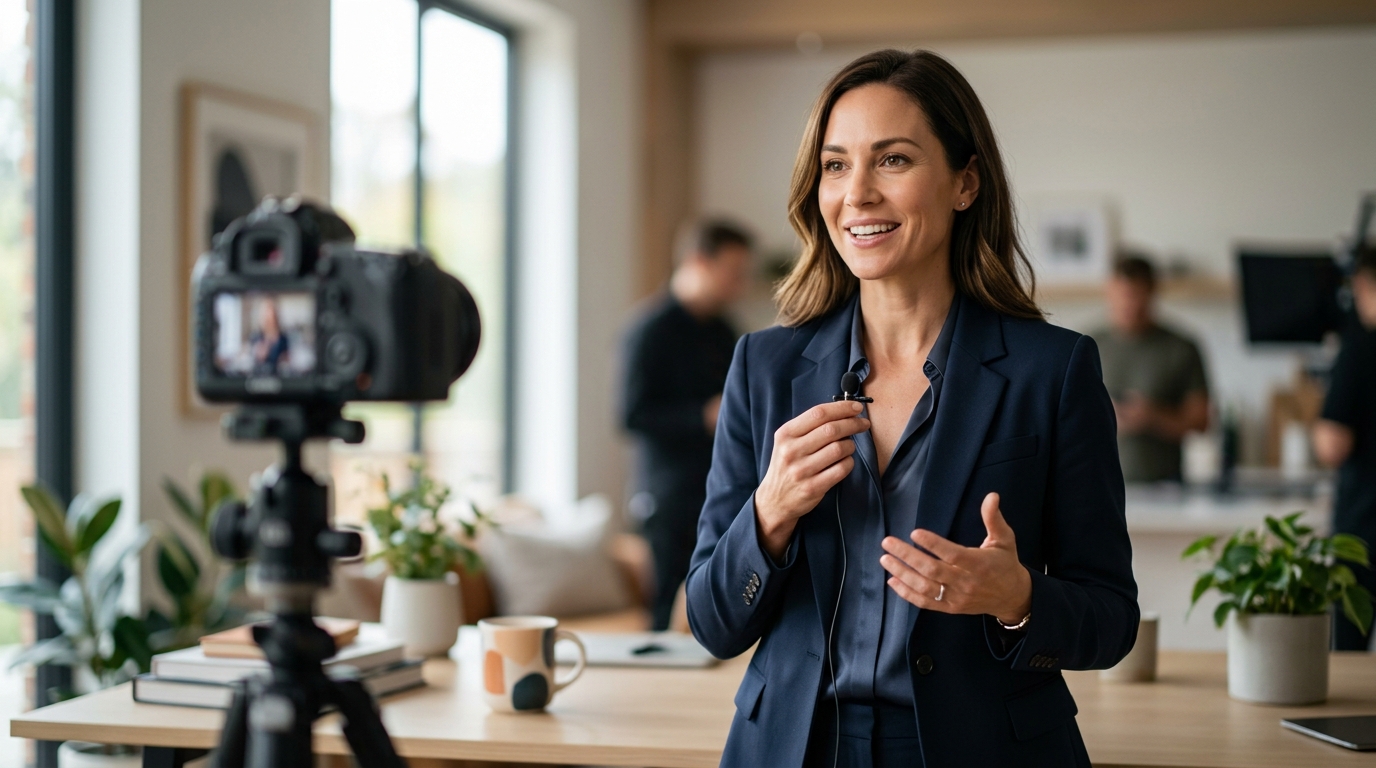
Video is the most powerful way to share your message, connect with your audience, and attract the clients you dream of working with. Yet for many entrepreneurs, the moment the red light turns on, confidence fades and words disappear. The good news? On-camera delivery is a learnable skill, not an innate talent. Whether you are a coach, consultant, realtor, or service provider, the strategies below will help you show up authentically, build trust faster, and turn viewers into paying clients. According to Firework research, adding video to a landing page can increase conversions by up to 86%, so mastering your delivery is not optional.
Why On-Camera Presence Matters for Entrepreneurs
On-camera presence is the combination of confidence, clarity, and authenticity you project when speaking through video. It is what makes a viewer feel like you are talking directly to them rather than reading a teleprompter.
The data backs up why this skill matters. About 84% of people say they have been convinced to buy a product or service by watching a brand's video. Websites with video content are 53 times more likely to rank on the first page of Google thanks to improved dwell time and engagement. If your competitors are showing up on camera and you are not, you are leaving revenue on the table.
| Video Marketing Metric | Impact |
|---|---|
| Landing page with video | Up to 86% increase in conversions |
| Video in email | Up to 300% higher click-through rate |
| Buyer persuasion via video | 84% of consumers convinced to purchase |
| Google ranking advantage | 53x more likely to reach page one |
| Video testimonials vs. text | 80-86% higher performance |
Start with a Mindset Shift
Before you work on lighting or scripts, you need to address the mental game. Camera confidence requires mental work. What you believe about yourself and your attitude about going on camera directly shape how you come across to viewers.
Overcome the Fear of Judgment
One of the main things that hold people back from showing up on video is the fear of judgment and the fear of making mistakes. Thoughts like "Do I know enough?" or "Will people want to hear from me?" are universal. Recognize these as normal, then shift your focus to the purpose behind why you are speaking. When you concentrate on helping your audience rather than evaluating yourself, the self-consciousness fades.
Adopt a Practice-Makes-Progress Mentality
Imposter syndrome is common among great entrepreneurs. Inc. Magazine notes that adopting a "practice makes perfect" mindset helps banish self-doubt while building experience and skill. The more videos you record, the more natural your delivery becomes. Even by video number 20, most creators notice a dramatic improvement.
Master Your Message Before You Hit Record
Magnetic messaging is the ability to communicate your value proposition so clearly that the right audience feels compelled to act. Keri Murphy's IT Factor Method focuses on Mindset, Messaging, Marketing, Media, and Monetization because clarity of message is foundational to everything else.
Use Bullet Points, Not Scripts
It is really difficult to sound natural when you are speaking from a word-for-word script. Instead, write a simple bullet-point outline and speak off the cuff from that. This approach preserves your natural voice while keeping you on track.
Niche Down Your Topic
Trying to cover too much material in one video makes your presentation feel rushed and your audience confused. Pick one clear takeaway per video. This positions you as an authority on that specific point and makes your content more shareable.
Practical On-Camera Delivery Techniques
Make Eye Contact with the Lens
Eye contact is the digital equivalent of a firm handshake. Look into the camera lens, not at your own face on the screen. This small adjustment makes viewers feel you are speaking directly to them, which keeps them engaged longer.
Frame Yourself Properly
Your body should fill roughly two-thirds of the screen with space above your head and both shoulders visible. Too far away looks timid; too close feels invasive. Turn on your camera's grid overlay to help you nail the composition every time.
Warm Up Before You Record
Just as a singer warms up their voice, you should do a quick vocal and physical warm-up. Roll your shoulders, take three deep breaths, and do a 60-second practice run. This releases tension and brings natural energy into your delivery.
Use Storytelling to Create Authentic Connection
Storytelling is the art of using personal or client narratives to make your message emotionally resonant. People remember stories far longer than facts alone. Share a brief transformation story: where you or your client started, the challenge faced, and the result achieved.
Inspired Living client success stories illustrate this perfectly. Entrepreneurs who once hated being on camera went on to launch courses, land TV features, and convert ideal clients consistently after learning to share their authentic stories. When you lead with vulnerability, your audience lowers their guard and leans in.
Choose the Right Video Type for Your Goal
Not all videos serve the same purpose. A positioning video is a professional video on your website that communicates who you are and who you serve. A promotional video highlights a specific offer or event. A live video builds real-time engagement and community trust. Knowing which format fits your goal keeps your content strategy focused and your audience clear on the next step.
Explore Inspired Living's video education library to learn which five video types are essential to your marketing strategy, or tune into The Keri Murphy Show podcast for weekly tips on showing up with confidence.
Key Takeaways
- On-camera delivery is a skill you build through practice, not a trait you are born with.
- Address mindset blocks first; fear of judgment is the number-one barrier to showing up on video.
- Use bullet-point outlines instead of scripts to sound natural and conversational.
- Look into the camera lens to create genuine eye contact with your viewer.
- Frame yourself using the rule of thirds for a professional, approachable look.
- Lead with storytelling to build emotional connection and trust before making an offer.
- Landing pages with video convert up to 86% better, making your on-camera skills a direct revenue driver.
Frequently Asked Questions
How do I stop being nervous on camera?
Start by recording short, low-stakes videos just for practice. Focus on the person you are helping rather than on how you look. Over time, repetition builds comfort. Many entrepreneurs in the Luminary Leadership program report that consistent practice is the single biggest confidence booster.
What equipment do I need to start filming?
A smartphone with a good camera, a ring light or natural window light, and a simple lapel microphone are enough to begin. You do not need a studio setup to create professional-looking content.
Should I use a teleprompter or speak freely?
Speaking from bullet-point notes generally produces more natural, engaging delivery. A teleprompter can work for polished ads, but for social media and relationship-building content, off-the-cuff delivery wins.
How long should my videos be?
It depends on the platform. Instagram Reels and TikTok perform well under 90 seconds. YouTube educational content can run 5 to 15 minutes. LinkedIn videos do best between 1 and 3 minutes. Match length to platform expectations.
What is the IT Factor Method?
The IT Factor Method is Keri Murphy's signature framework covering Mindset, Messaging, Marketing, Media, and Monetization. It is a transformative 2-day experience designed to help entrepreneurs master on-camera presence and amplify their business. Learn more on the IT Factor page.
How often should I post video content?
Consistency matters more than frequency. Posting one quality video per week is more effective than sporadic bursts of five videos followed by silence. Build a schedule you can sustain.
Can video really help me get more clients?
Absolutely. Video builds trust faster than text or images alone. About 84% of consumers say a brand's video convinced them to buy. Entrepreneurs who invest in on-camera skills often see direct revenue growth from their content.
Do I need professional training to be good on camera?
While self-teaching through practice works, professional training accelerates results. Programs like Inspired Living's Convert On-Camera Training give you frameworks, feedback, and accountability that solo practice cannot replicate.
Ready to Show Up with Confidence?
Your brilliance deserves to be seen. If you are ready to stop hiding behind your expertise and start showing up on camera with clarity and confidence, book a free visibility strategy call with the Inspired Living team. Together, you will map out the most aligned path forward so you can be seen, be known, and be paid for your brilliance.